 Phillip Ayres, Land Use Advisor in the East and East Midlands at the Forestry Commission, shares four characteristics to help you identify trees during winter.
Winter is here and the leaves have fallen from the trees, making them so much harder to identify. Or are they?
A couple of years ago I found myself in a woodland in the depths of winter, unable to tell one tree apart from the other without their leaves. I decided I wanted to develop my knowledge and enrolled on a course by a local nature group to help me identify trees in the winter.
Armed with my new-found knowledge and a suitable field guide (I recommend ‘Winter Trees: A Photographic Guide’ from the Field Studies Council), this has become one of my favourite times of the year. When being a twig enthusiast comes to the fore.
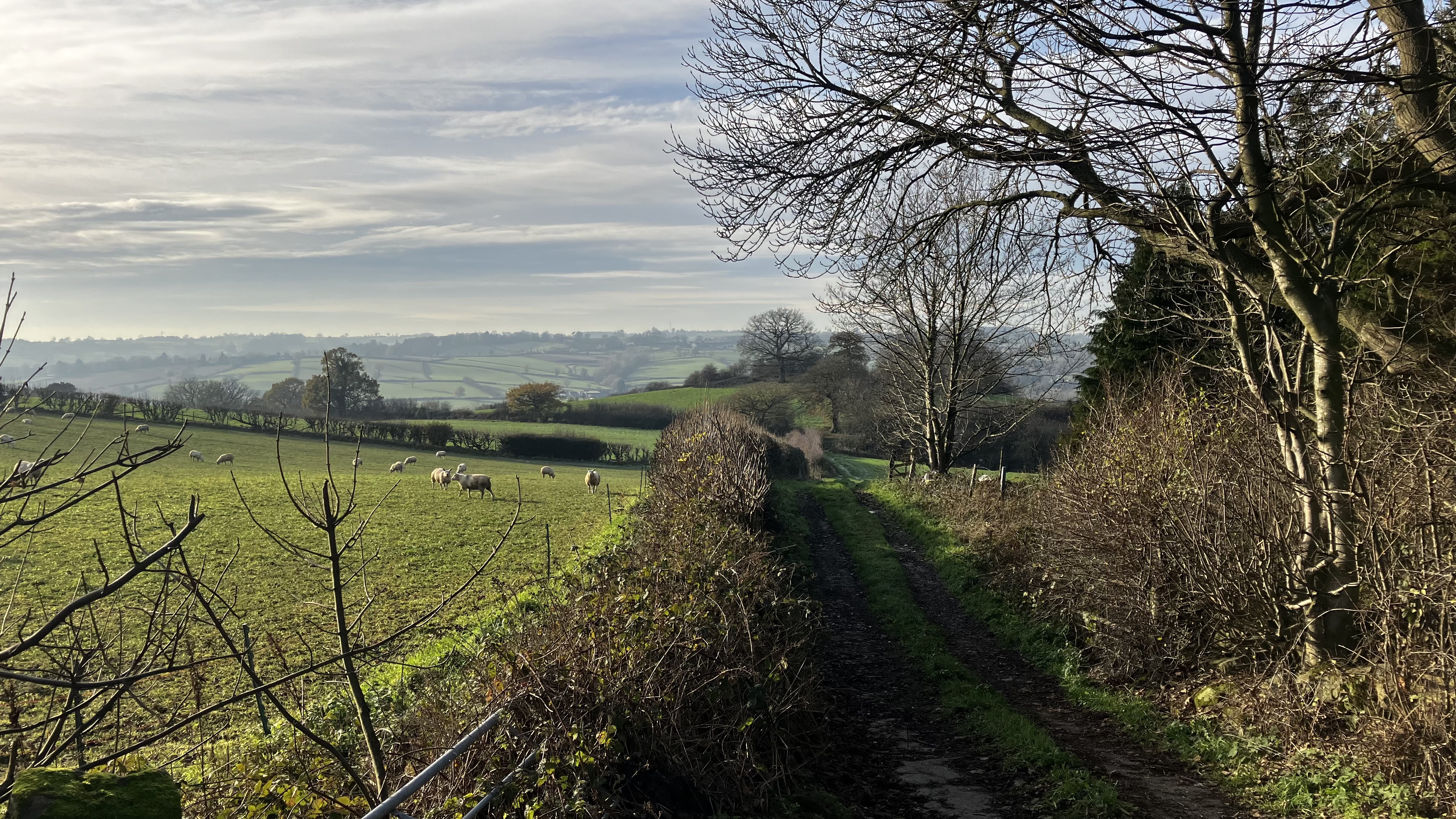
Four characteristics to help identify trees in the winter
When identifying trees in winter, there are four characteristics to look at:
- general shape of the tree
- bark
- twig structure
- buds
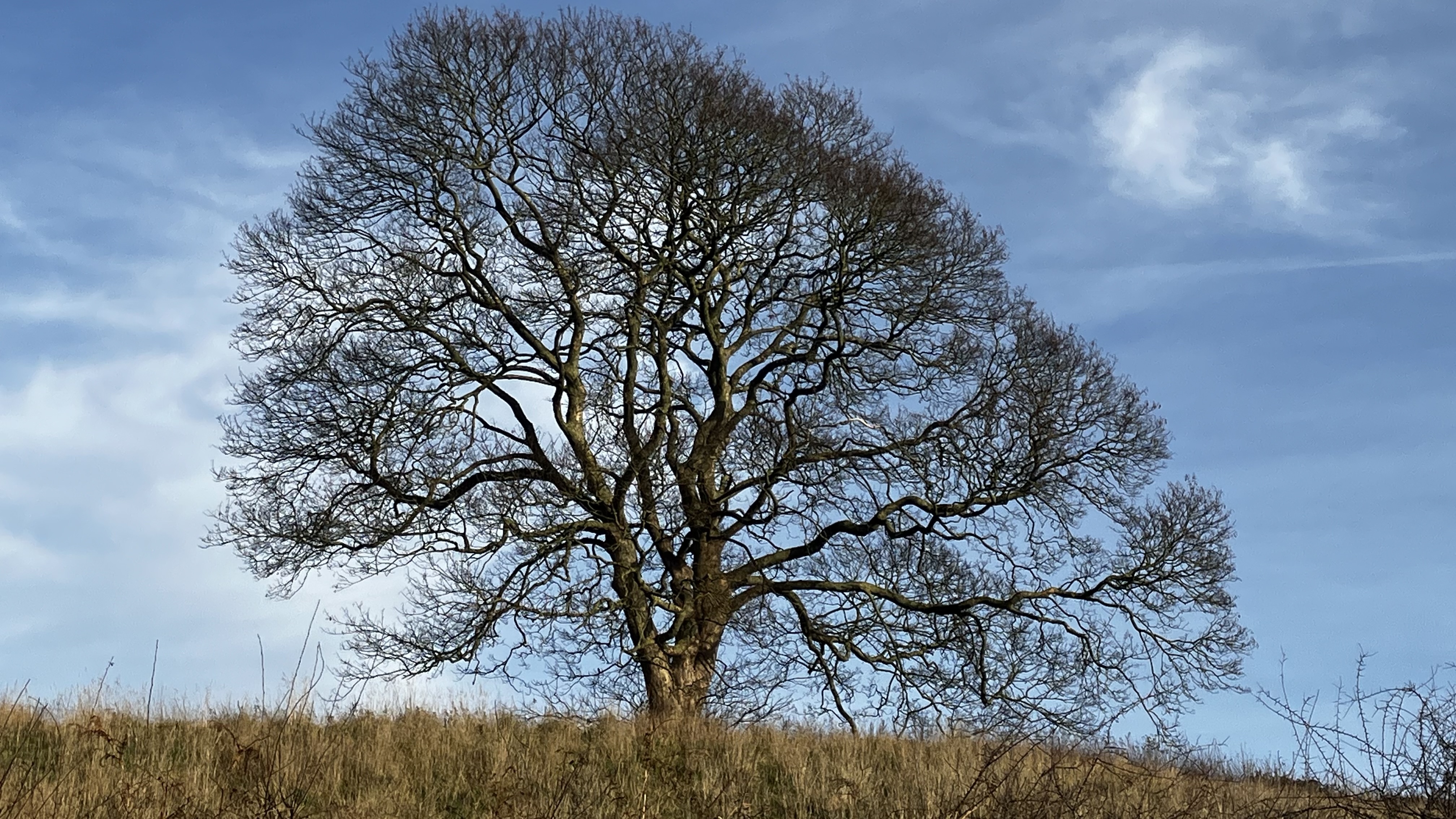
The shape of a tree and its bark can help with identifying common species. For instance, a mature oak has a broad, spreading crown even without leaves, while silver birch is unmistakably white and papery. But for more reliable identification, the twig and bud structure will be the parts of the tree you want to look at.
Budding detectives
On every twig there will be a terminal bud at the very end. This is the main growth point at the top of a tree’s branch or stem, and where you look for your first clue.
A sycamore, for instance, has a large, green triplet terminal bud. An oak tree has a cluster of buds, while ash has really obvious black buds that look like a deer’s hoof.
As you look along the twig, the buds will be arranged in a distinct style and shape for each species. This is our second clue. Buds will be arranged in pairs opposite each other, or alternating along the stem. There are exceptions, such as lime, where the stem and buds have a distinct zigzag pattern, or pussy willow, where the buds spiral down the twig.
The buds themselves help identify the tree. They will be rounded, pointy and sharp, or boxing glove shaped. They can be scaly, smooth or sticky. Some buds sit very close to the stem, while others are mounted on small pegs. Even these pegs can provide a clue. For instance, hawthorn buds, sit on a peg that resembles a pile of pancakes.
Colourful clues
“But all twigs are grey!” I hear you cry. Well, no, there are a range of colours and patterns out there which are specific to individual species.
Most twigs will be red, grey or green. Ash is a very pale grey, while buckthorn is a very dark grey. Spindle trees tend to be a grey-green colour, while hawthorn and goat willow are a distinct green colour. Lime is a very bright, distinctive red, while rowan, birch and sweet chestnut are all a much darker red.
A tree’s texture
Twigs can also have a distinctive texture. Birch is characteristically rough with a ‘paint spatter’ of white lenticels (small openings in a tree’s bark). Trees such as elm and field maple have very gnarled twigs, with deep horizontal grooves resembling a crocodile’s back.
Running your fingers along a twig can sometimes tell you as much as looking at it.
Ready for a woodland wander?
Armed with your new tree identification knowledge, a winter woodland walk becomes more interesting, and a personal challenge or competition for you and the family.