 Joan Webber is the Forest Research Principal Pathologist and works on invasive pathogens, including Phytophthora pluvialis. Collaborating with Forest Research and Forestry Commission colleagues, her research helps us understand the threat from the agents and how it can be managed.
After more than 4 years of intensive scientific investigation, the evidence is in and it's positive news for woodland owners and nurseries across England. The 6 demarcated areas for Phytophthora pluvialis – Cornwall and Devon, Cumbria, Herefordshire, Surrey, Gloucestershire and Shropshire – have now been officially revoked. This follows research that has deepened our understanding of this tree pathogen and has allowed us to change our assessment of the risk it poses.
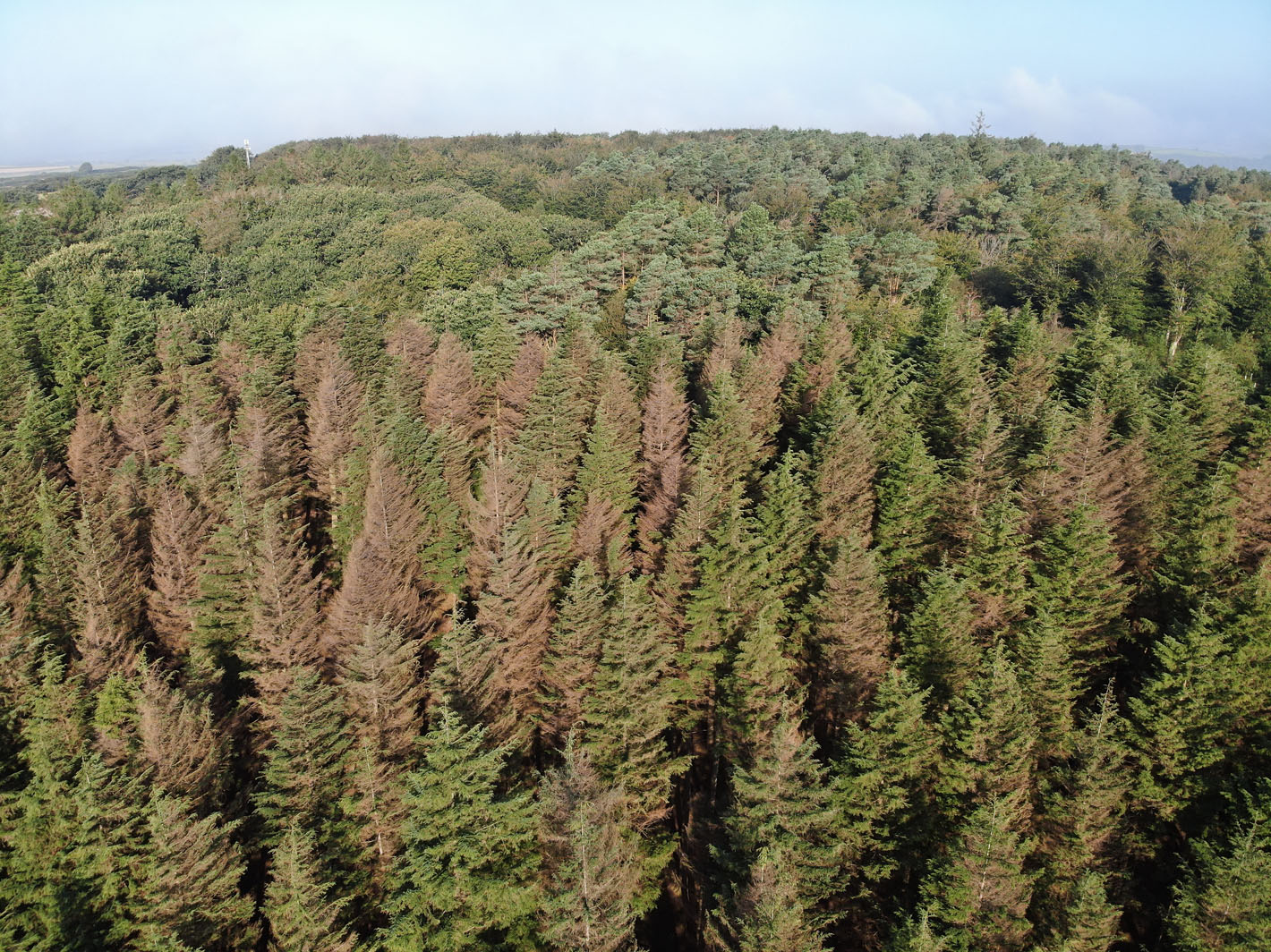
Since Phytophthora pluvialis was first discovered in the UK in 2021, extensive ground and aerial surveillance has been undertaken across the UK. In England, a staggering 1,312 sites have been visited, thousands of samples were collected and tested and 3,930 hectares were surveyed on the ground – roughly an area 16 times the size of the City of London. 22 helicopter flights have also taken place as part of aerial surveys across the south-west and south-east of England, and in Wales.
The research journey: from unknown threat to understood risk
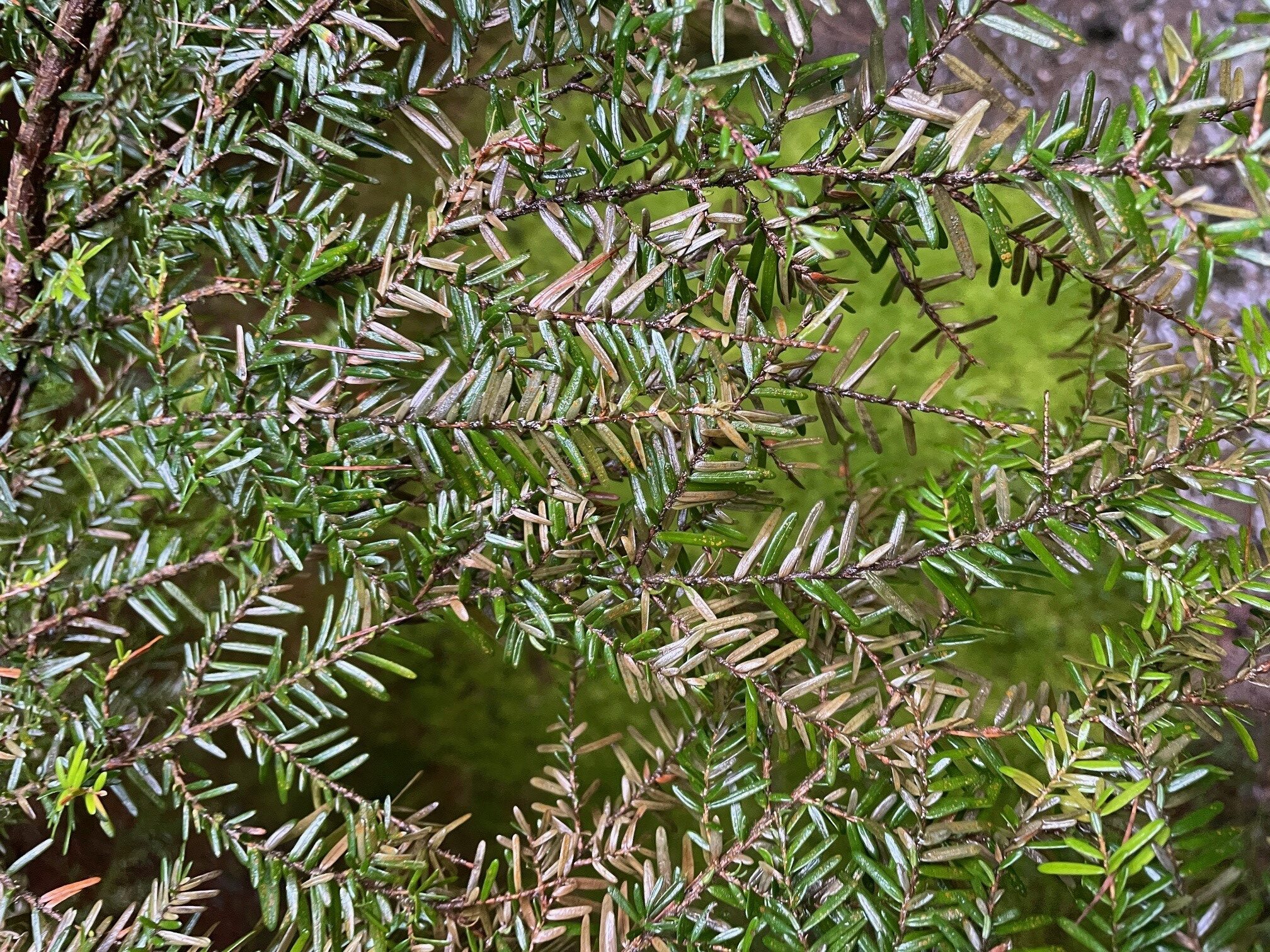
Phytophthora pluvialis is a fungus-like pathogen that affects various conifer species. When it was first identified in Great Britain in September 2021 on Douglas fir and western hemlock, our scientists faced significant knowledge gaps. The pathogen had never been found in Europe, nor on western hemlock.
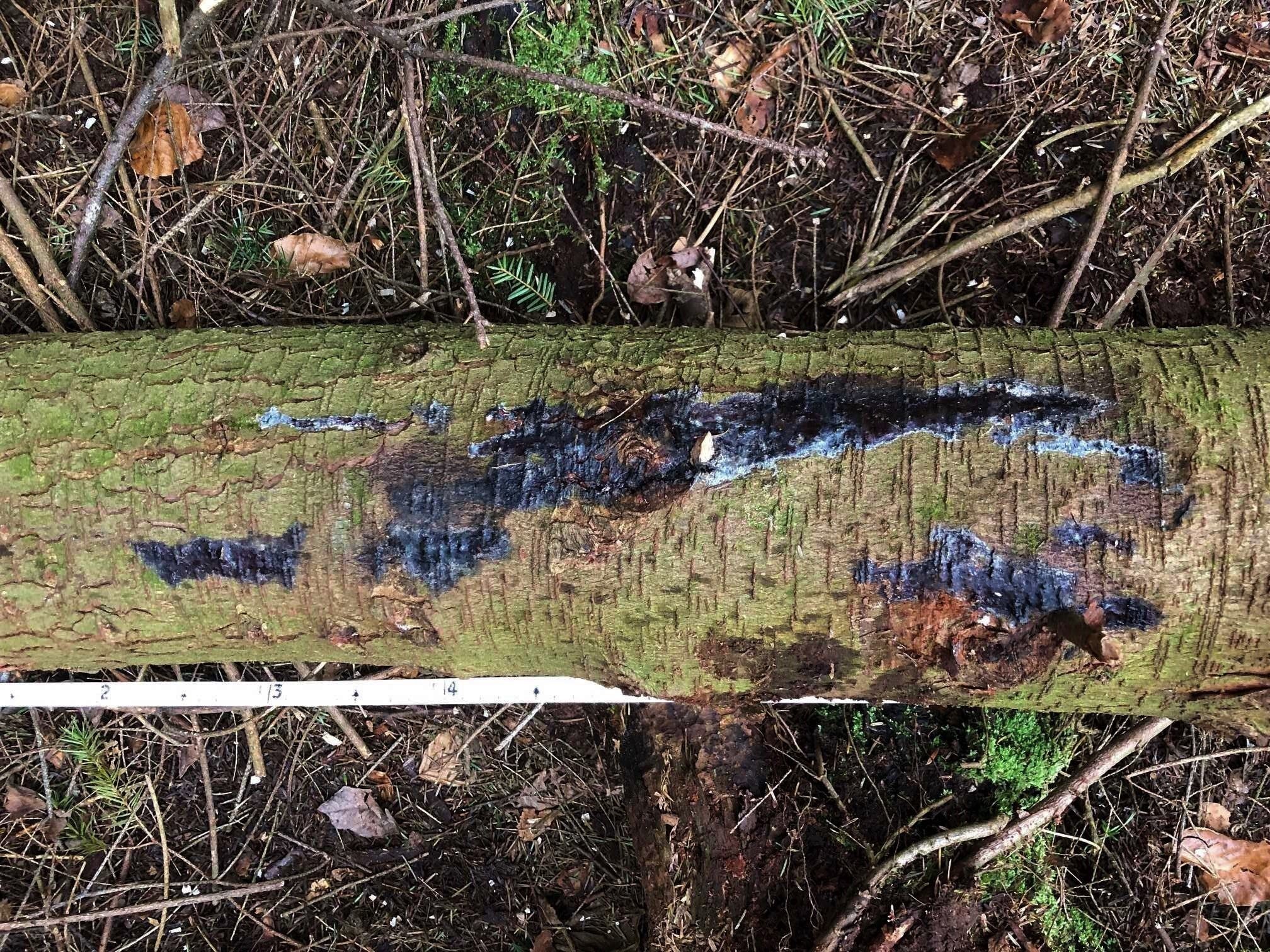
While it was known to affect foliage of Douglas fir and tanoak in the USA, and radiata pine and Douglas fir in New Zealand, in Britain it appeared to infect foliage and also cause stem cankers on hemlock and Douglas fir. This suggested it was behaving differently under our conditions.
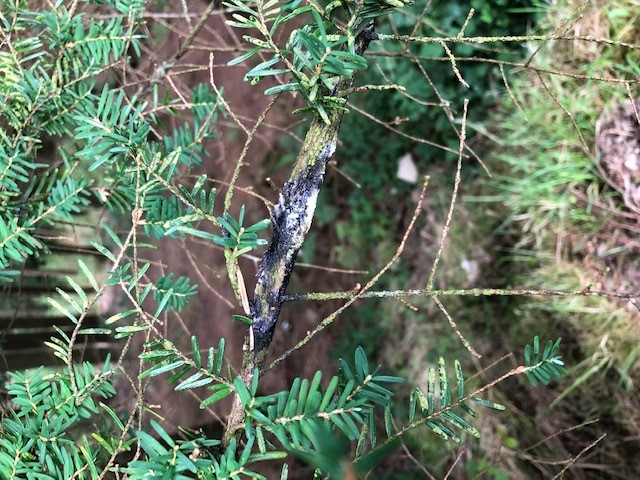
This uncertainty prompted precautionary measures, including treating the pathogen as a quarantine pest and establishing demarcated areas around outbreak sites to reduce the risk of spread. Crucially, it also triggered an extensive programme of research led by Forest Research pathologists specialising in Phytophthora diseases.
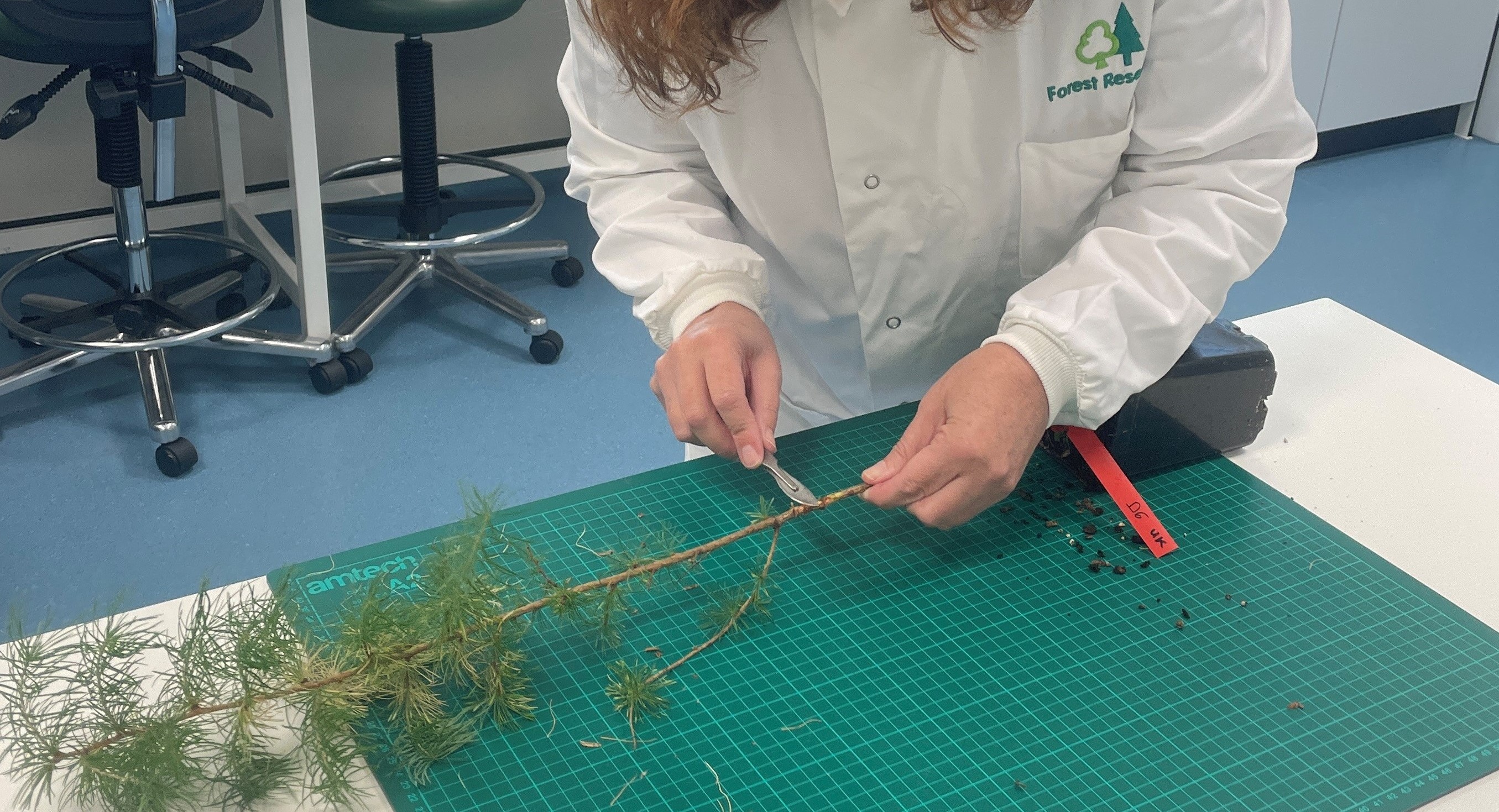
As part of this work, rainwater and stream samples were tested to understand how P. pluvialis spreads in the natural environment, and researchers investigated what conditions trigger sporulation – the production of spores. Forest Research have tested over 4,000 samples from stems, branches, foliage (needles) and bark as part of a comprehensive diagnostic programme.
What the evidence tells us
Timber impact: largely superficial damage
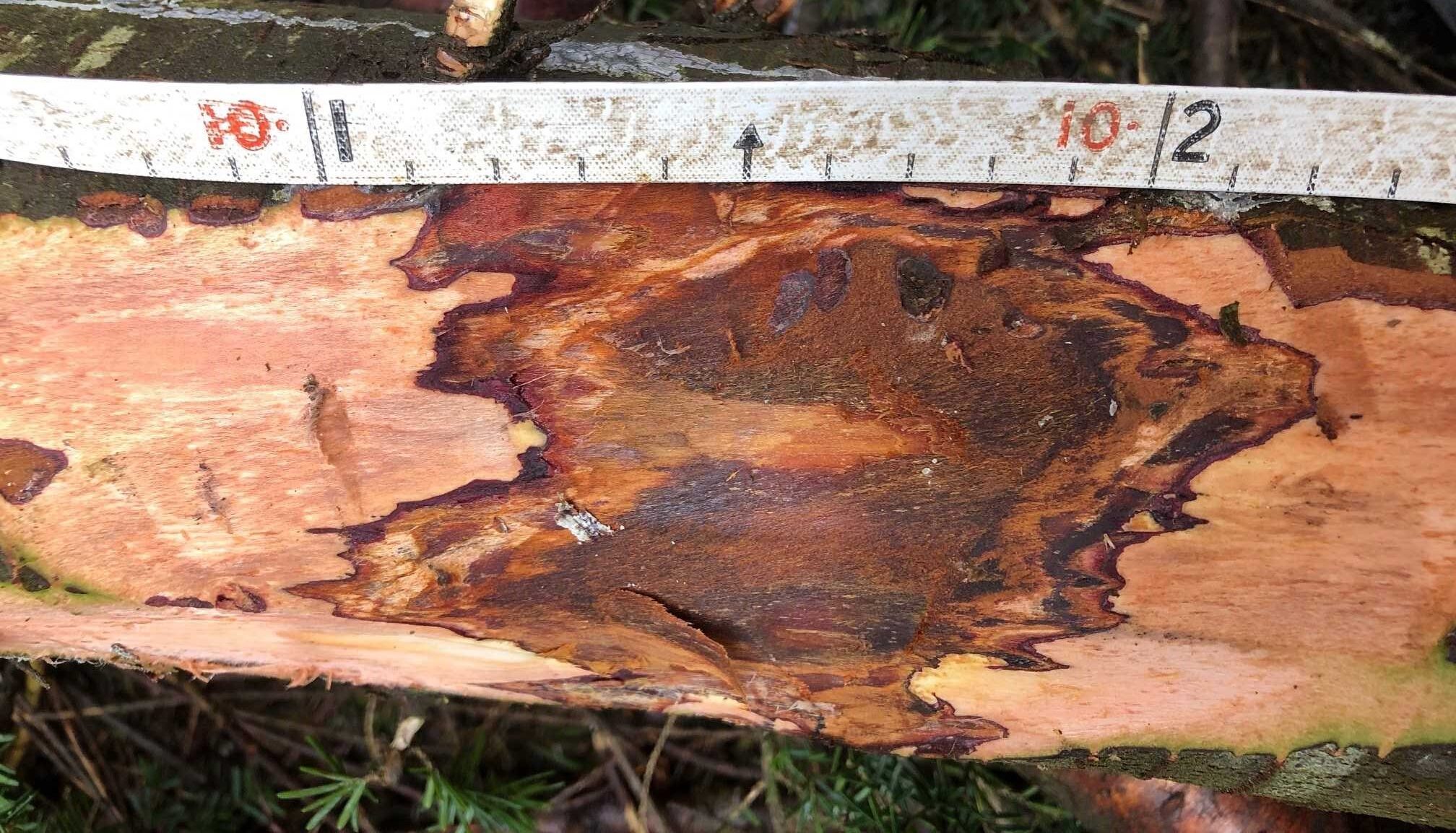
For those managing woodlands commercially, the research into timber impact was particularly important. In the early days following first detection, restrictions were placed on timber movement within demarcated areas to limit potential spread of the disease. Forest Research examined how deeply the pathogen might penetrate from bark cankers into the sapwood beneath and found that this penetration tends to be largely superficial.
This is significant because superficial damage is typically removed during normal timber processing. In practical terms, even where trees are affected by P. pluvialis, the commercial value of the timber is unlikely to be severely compromised.
When this research concluded, restrictions on timber movement were lifted in 2023 – an early example of evidence directly informing policy. Although, some questions remained requiring further research on certain species of plants for planting.
Plant trade: not a primary pathway of spread
One of the key concerns was whether P. pluvialis would spread rapidly through the nursery trade. Demarcated areas were established around outbreak sites that limited trade movement without authorisation and inspection whilst research was ongoing.
The evidence has since painted a more reassuring picture. Animal and Plant Health Agency inspectors have been monitoring for P. pluvialis symptoms in nurseries since 2021. Additional targeted testing of both water and foliage was recently carried out at nursery sites located within demarcated area, focusing specifically on sites where host plants were present.
Despite being within 10km of confirmed or previously confirmed infection sites, there were no positive findings. In fact, there has never been a positive finding of P. pluvialis on a nursery site.
While spread via plant trade remains theoretically possible, the evidence strongly suggests it is not the primary pathway for the pathogen's movement across the country – a finding that was instrumental in downgrading the risk rating for this route of spread.
Environmental impact: low risk of extensive spread to woodlands
Perhaps the most significant findings relate to the pathogen's behaviour in the natural environment. Forest Research pathologists discovered that P. pluvialis shows relatively low levels of sporulation across a range of host species when compared to other highly damaging Phytophthora species such as Phytophthora ramorum. This matters because sporulation is how Phytophthora species spread and infect new hosts.
Researchers also examined rhododendron, a plant notorious for harbouring and spreading P. ramorum, and again found that sporulation levels of P. pluvialis were relatively low in comparison.
Laboratory testing of infected western hemlock needles revealed another encouraging finding – the persistence of P. pluvialis in needle tissue is low. Field investigations supported this, with detection of the pathogen in naturally infected western hemlock needles proving sporadic and often low or non-existent over repeated testing. This suggests the pathogen may not survive as long in plant material as some related species, potentially limiting its ability to spread over time.
Based on these findings, risk ratings for environmental and social impacts have been revised to low.
Comparison with phytophthora ramorum: a less severe pathogen
We know that some Phytophthora species can be incredibly damaging to plants and trees, but we were unsure on how this particular species may impact other possible host plants.
To understand how P. pluvialis compares to established threats, Forest Research, working with scientists at Fera Science Ltd and Science and Advice for Scottish Agriculture, conducted extensive environmental host testing across more than 30 different species, both productive and amenity.
The results showed that P. pluvialis generally produces much less severe symptoms than P. ramorum. Encouragingly, trees of both western hemlock and Douglas fir have also showed signs of recovery following bark killing attacks by P. pluvialis, suggesting that for damage to progress, repeat infections may be needed.
For woodland owners familiar with the significant damage caused by P. ramorum, particularly in larch, this comparison provides important context about the relative threat posed by the newer pathogen.
Science informing policy
Following this comprehensive research programme, the UK Plant Health Risk Group assessed whether P. pluvialis meets the official criteria of a quarantine pest, and concluded that it does not. This led to a policy change, which means statutory action is no longer required, and the removal of all 6 demarcated areas in England.
This story demonstrates something important about how plant health policies work in practice. When faced with an unknown threat, authorities took appropriate precautionary measures to protect our woodlands. Rather than leaving these restrictions in place indefinitely, they worked closely with the Forestry Commission and Forest Research to carry out investigations to fill those knowledge gaps.
As evidence accumulated showing the pathogen posed a lower risk than initially feared, policies were adjusted accordingly – actions that were responsive, proportionate and firmly grounded in scientific evidence.
What this means for woodland owners and nurseries
In Great Britain, P. pluvialis has been found primarily on Douglas fir and western hemlock, with just one recorded instance of infection on larch. While the formal restrictions have now been lifted, maintaining good biosecurity practices remains sensible for all woodland managers. This includes washing boots and equipment before leaving forest and woodland sites to help prevent the spread of plant pathogens more broadly.
Where P. pluvialis is identified in the future, the Forestry Commission will provide guidance to support land managers in managing affected trees.
The lifting of these restrictions marks a positive milestone for those who have navigated the challenges of restrictions over recent years and shows the value in investing in scientific evidence to underpin forestry policy.
Read further guidance on how biosecurity can prevent the introduction and spread of tree pests and diseases.