 Emily Robinson, Content Officer at the Forestry Commission, explains how there is more to catkins than meets the eye when it comes to tree reproduction and the ecological value they provide to our woodlands.
Late March is a transitional moment in any British woodland. The canopy is still largely bare, temperatures remain unpredictable and the growing season feels more promise than reality. Yet if you look closely at the trees, you will see signs that the season is already well underway.
Catkins are slender, drooping, apetalous flower clusters (flowers with no petals) produced by some broadleaved trees. Look around and they are out in force, completing the work of pollination weeks before the first leaves appear. They begin to emerge in late winter and mark the opening of the reproductive calendar for our woodlands.
This blog will look at the reproductive strategy behind catkins, discuss some of the key tree species that produce them and explores the ecological value that catkins provide in woodlands.
Understanding catkins as a reproductive strategy
Unlike most flowers which contain both male and female reproductive parts, all flowers within a catkin are the same sex. Some trees are monoecious, meaning they carry both male and female catkins on the same plant, whereas others are dioecious, meaning male and female catkins grow on separate plants.
Male catkins produce pollen and tend to be longer, bearing many tiny flowers before dropping from the tree entirely once pollen has been released. Female catkins, by contrast, are more discreet, turning brown and woody after pollination while remaining on the tree to develop into seeds, nuts or fruit.
Catkins are a highly efficient strategy for trees that rely on wind pollination. Flowering before the leaves emerge reduces the potential for obstruction and allows the tree to maximise pollen dispersal. Because wind pollination is relatively haphazard, trees produce extremely large quantities of pollen to increase their chances of success.
Some catkin-bearing species are insect-pollinated. Here too, flowering before other plants bloom offers an advantage by reducing competition for early pollinators.
Hazel (Corylus avellana)
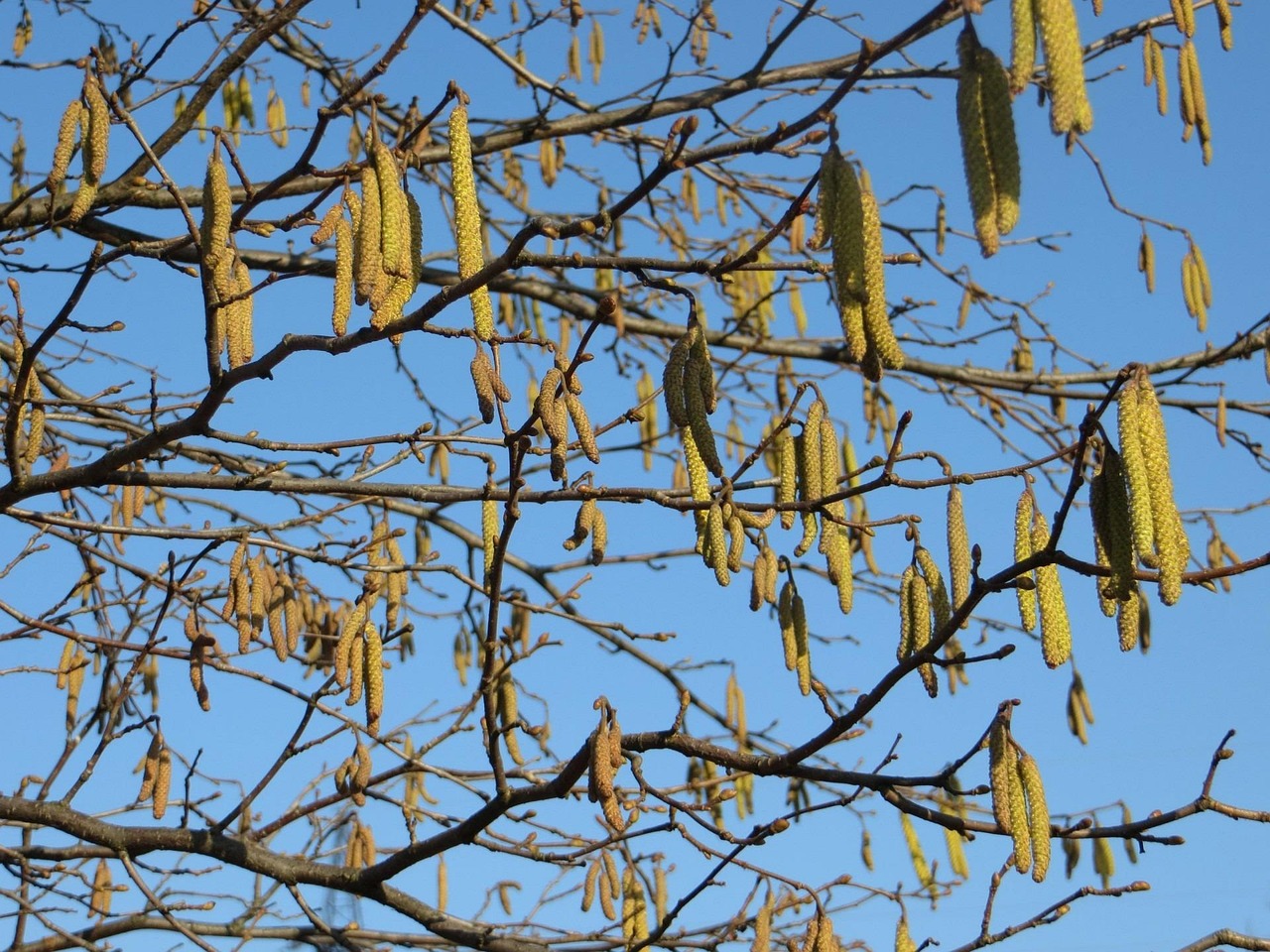
Hazel is monoecious, though its female flowers must be cross-pollinated from another tree. By late March, male hazel catkins are already well past their peak, typically emerging as early as January in mild years, with peak release often in February or early March. The female flowers – tiny crimson tufts erupting from buds – remain receptive on many trees into late March.
Hazel is an important species for traditional coppice management across lowland England and its early flowering matters enormously to the coppice cycle. A good seed year, shaped partly by successful catkin pollination, supports natural regeneration in the gaps opened by cutting. Left unmanaged, hazel may survive for around 80 years, but coppiced stools can live for several hundred years.
Hazel also provides vital habitat for the protected hazel dormouse, with hazelnuts providing essential fat reserves as dormice prepare for hibernation in autumn.
Alder (Alnus glutinosa)
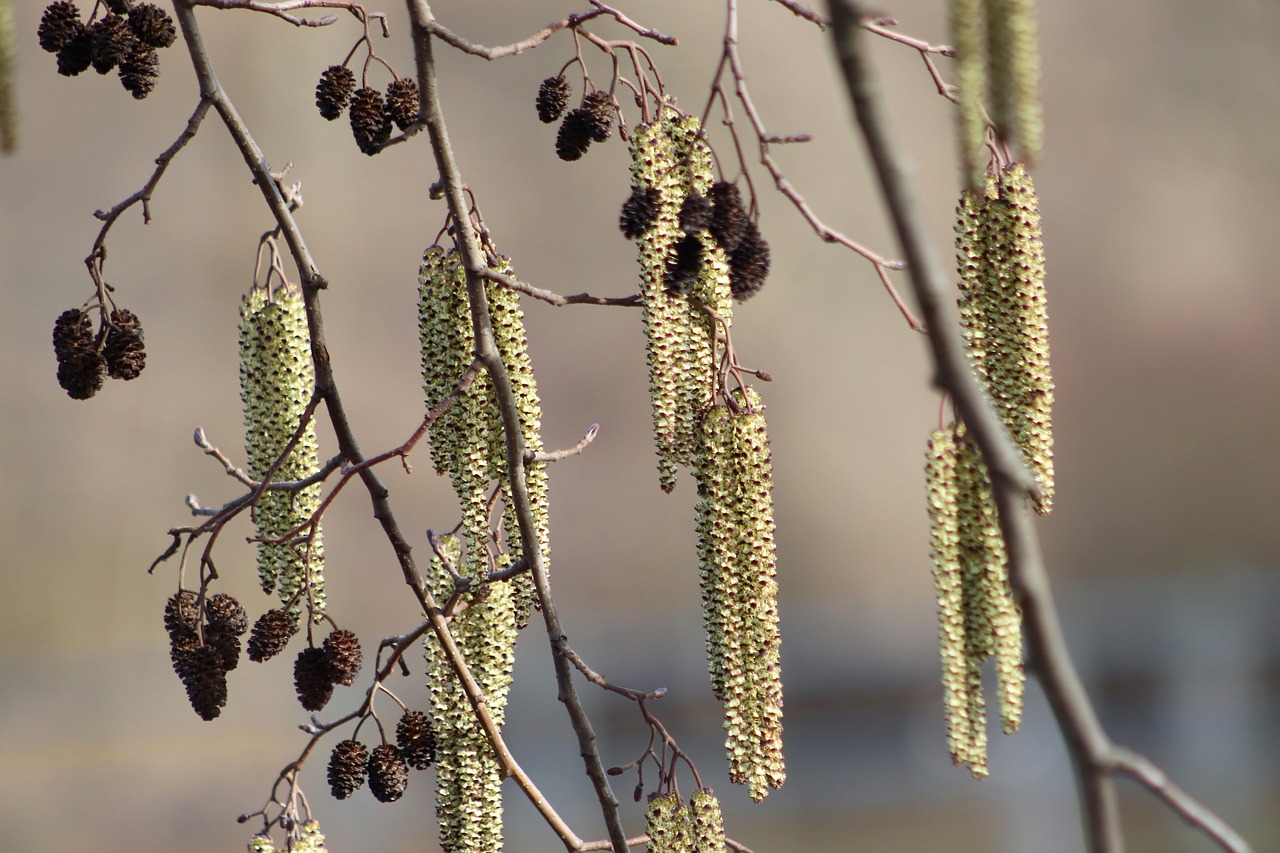
Walk along any tree-lined river or wet woodland site in late March and you will likely find alder in full catkin display. The male catkins are long and reddish-purple, hanging in clusters of two to five, while the small, cone-like female catkins will harden into woody structures by autumn. Alder is monoecious, like hazel.
Alder is a species that foresters increasingly value not just for its timber. It forms nitrogen-fixing root nodules (small growths on roots) through a symbiotic relationship with the Frankia alni bacteria, which allows the tree to turn gaseous nitrogen into usable ammonia.
Alder is also known for stabilising riverbanks and in upland planting schemes and riparian restoration projects, it is a go-to species. Unlike many trees, it thrives in waterlogged or marshy, oxygen-poor soils and improves soil fertility for other plant species.
Silver birch (Betula pendula) and downy birch (Betula pubescens)
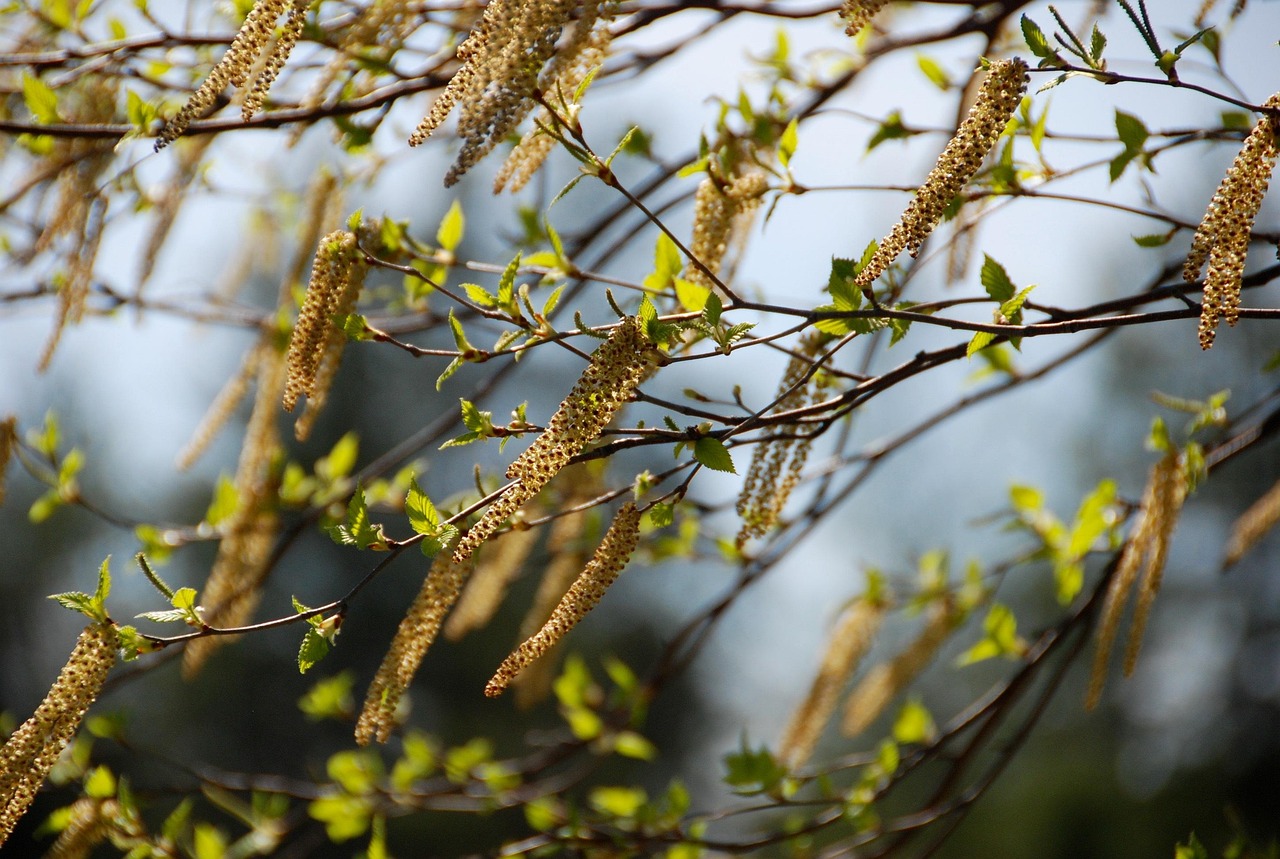
Male birch catkins – long, yellow-green, and produced in abundance – are typically in full release by late March, shedding large quantities of pollen into the air. The female catkins are smaller, upright and less conspicuous, but their output is not to be underestimated. A single mature birch can produce hundreds of thousands of seeds, each adapted to colonise bare ground.
Both birch species are highly effective pioneer trees, often among the first to establish on cleared or disturbed land owing to their tolerance of nutrient-poor soils. As they grow, they improve the soil for more demanding species and can act as nurse trees – providing shelter that allows slower-growing, more sensitive species to establish beneath or alongside them.
Hornbeam (Carpinus betulus)
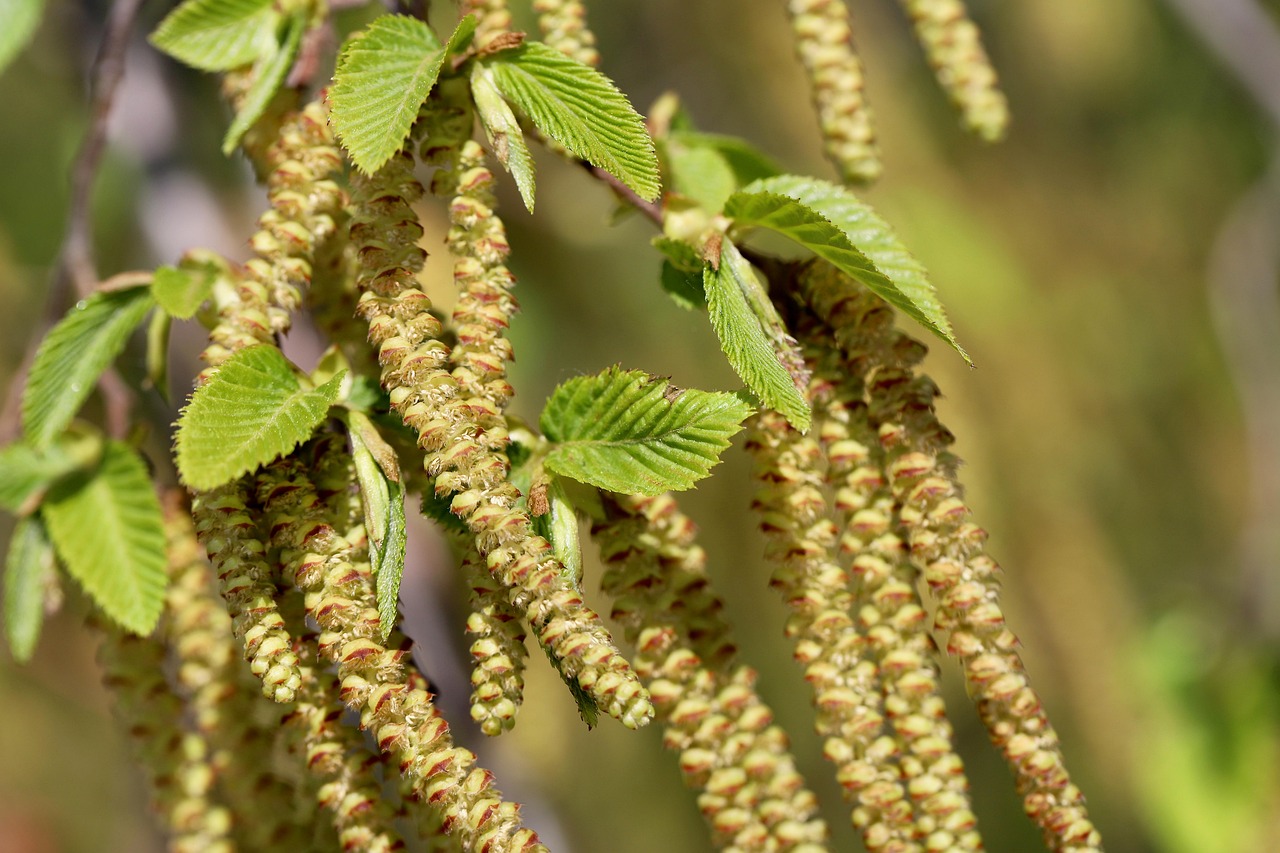
Hornbeam is a monoecious tree from the birch family, with catkins appearing between late March and April, often just before or alongside new leaves. The long, male, yellow-green catkins appear first to release pollen. Next come female catkins which are smaller to start with and develop into papery, green-winged fruit clusters called samaras that ripen by autumn.
Hornbeam is a shade-tolerant species that can thrive beneath the canopy of larger trees, increasing the diversity of a woodland canopy. Its dense foliage provides shelter and nesting habitat for birds and small mammals.
Hornbeam gets its name from the strength of its timber and is a prized source of hardwood. Historically, it was used to make tools, coach wheels, cogs in traditional windmills, and for firewood and charcoal. These days, it is mostly used for furniture and flooring. It is a relatively quick-growing tree that allows for coppicing and pollarding to provide firewood and charcoal on 20- to 35-year rotations.1
Goat willow (Salix caprea)
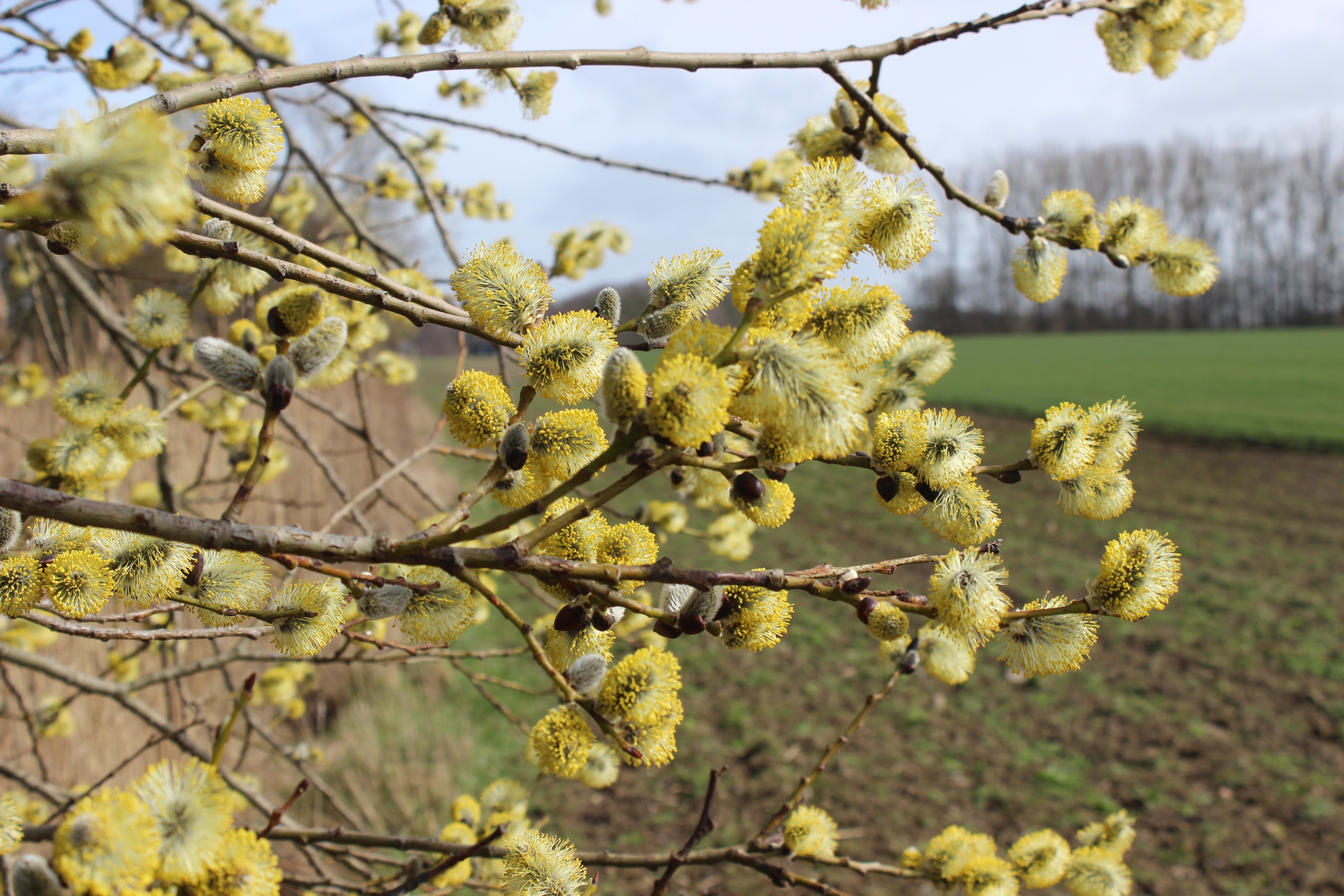
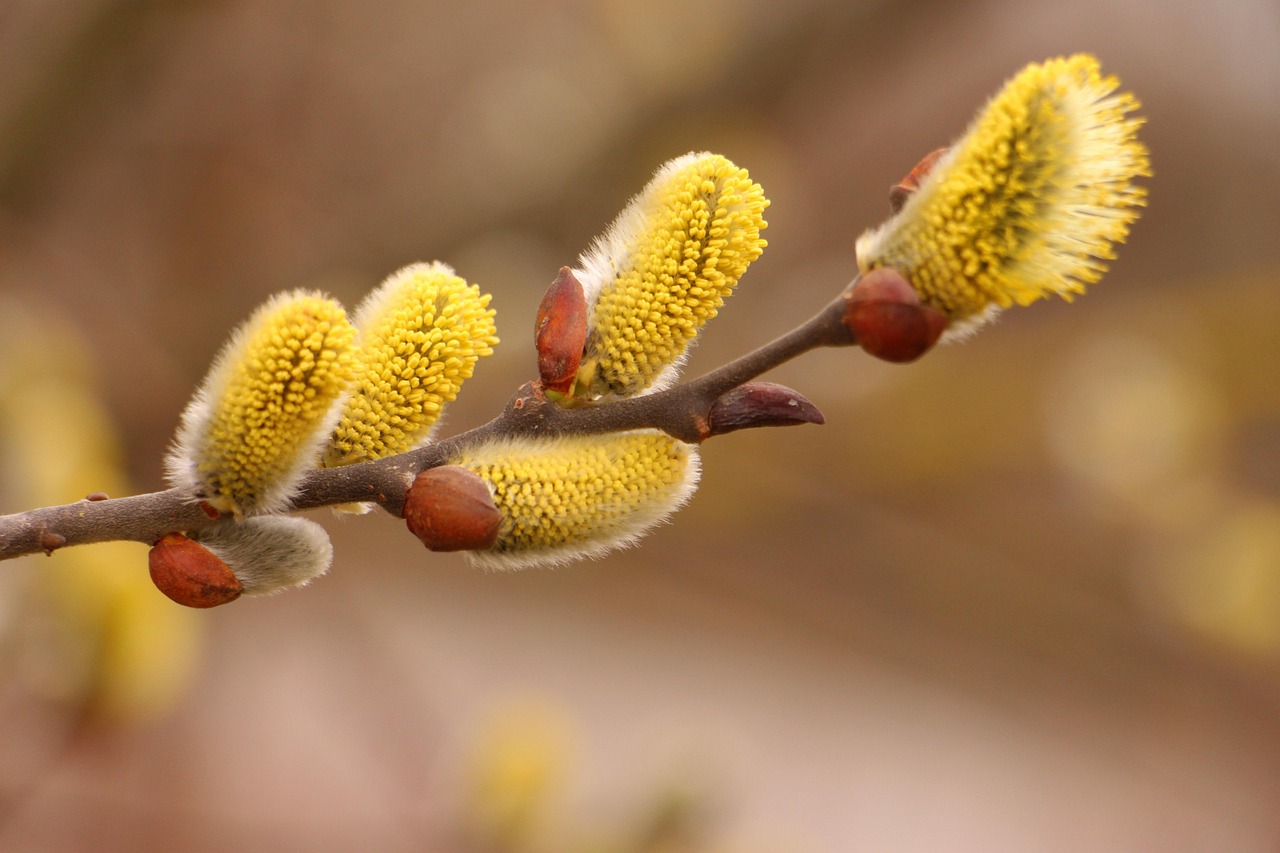
Goat willow, widely known as pussy willow, is dioecious. On male trees, catkins begin as grey, oval and fluffy structures, maturing to a bright yellow as the anthers emerge and pollen ripens. Unlike the drooping catkins of hazel or birch, these stand upright on the stem. On female trees, the catkins are longer, thinner and greener.
Goat willow relies primarily on early bees and hoverflies to carry pollen between trees, though wind can play a secondary role. It is an early-season food source for pollinators when little else is available and is a host for several lichen species, contributing to woodland biodiversity.
The name goat willow likely derives from the historical use of its leaves and shoots as forage for livestock; it remains a familiar species in the agricultural landscapes of northern Europe, planted as windbreaks and in hedgerows.2
The value of decomposing catkins
Catkins are not just a vital resource while on the tree. They continue to provide ecological value once pollination is complete. Spent catkins fall to the ground in considerable volumes – a single mature birch for instance, can shed thousands of catkin remnants across a season.
Unlike tougher leaf litter which may take years to break down, catkins decompose relatively quickly and are more readily processed by soil organisms. As they break down, they add organic matter to the soil surface, feeding the microbial communities that drive nutrient cycling.
Incorporating catkin-bearing species into your woodland
Catkins are easy to overlook – they emerge briefly before a woodland truly wakes. However, their emergence is a finely timed synchronisation of flowering, pollination and soil enrichment that sets the productive rhythm for the rest of the year.
For woodland managers, retaining and encouraging catkin-bearing species within your woodland is a straightforward way to support both soil health and early-season biodiversity.
Where hazel is present, maintaining a coppice rotation ensures a continuous supply of younger, more productive stools (the stump and root system of a tree that remains after coppicing) alongside mature specimens.
For riparian sites, alder in planting schemes will pay dividends not just in bank stabilisation but in long-term soil fertility. Due to its nitrogen-fixing capacity, planting density is an important consideration. Continuous alder stands risk elevated nitrogen loading into watercourses, so interspersing with other species is advisable on sensitive catchments.
On disturbed or recovering ground, allowing birch to establish naturally as a pioneer rather than clearing it prematurely can help to accelerate ecological recovery. And where goat willow is present at woodland edges or rides, retaining it rather than treating it as a weed will support early pollinators at a time when they need it most.
Take a look at The Tree Council’s Spring in Your Step webpage for a helpful tree flower identification guide that features a variety of catkin-bearing trees you can spot this spring.

Leave a comment