 Harry Joyce, Economist at the Forestry Commission, explains what green finance is and how it benefits landowners and the environment.
If you’re a farmer or landowner thinking about woodland creation or other changes to your land, green finance could provide an opportunity for new sources of private funding to support that work. In this blog, I’ll explain what green finance means and how it could benefit you and the environment.
What is green finance?
The term green finance has grown quickly over the past few years. It’s now used to cover a wide range of activities, which can make it a confusing term.
At its core, green finance means any structured financial activity, product or service designed to create better environmental outcomes. For example, carbon credits and biodiversity credits are structured financial products that specifically relate to environmental benefit.
There are multiple forms of green finance, but they broadly fall into two categories: ‘financing green’ and ‘greening finance’.
Financing green
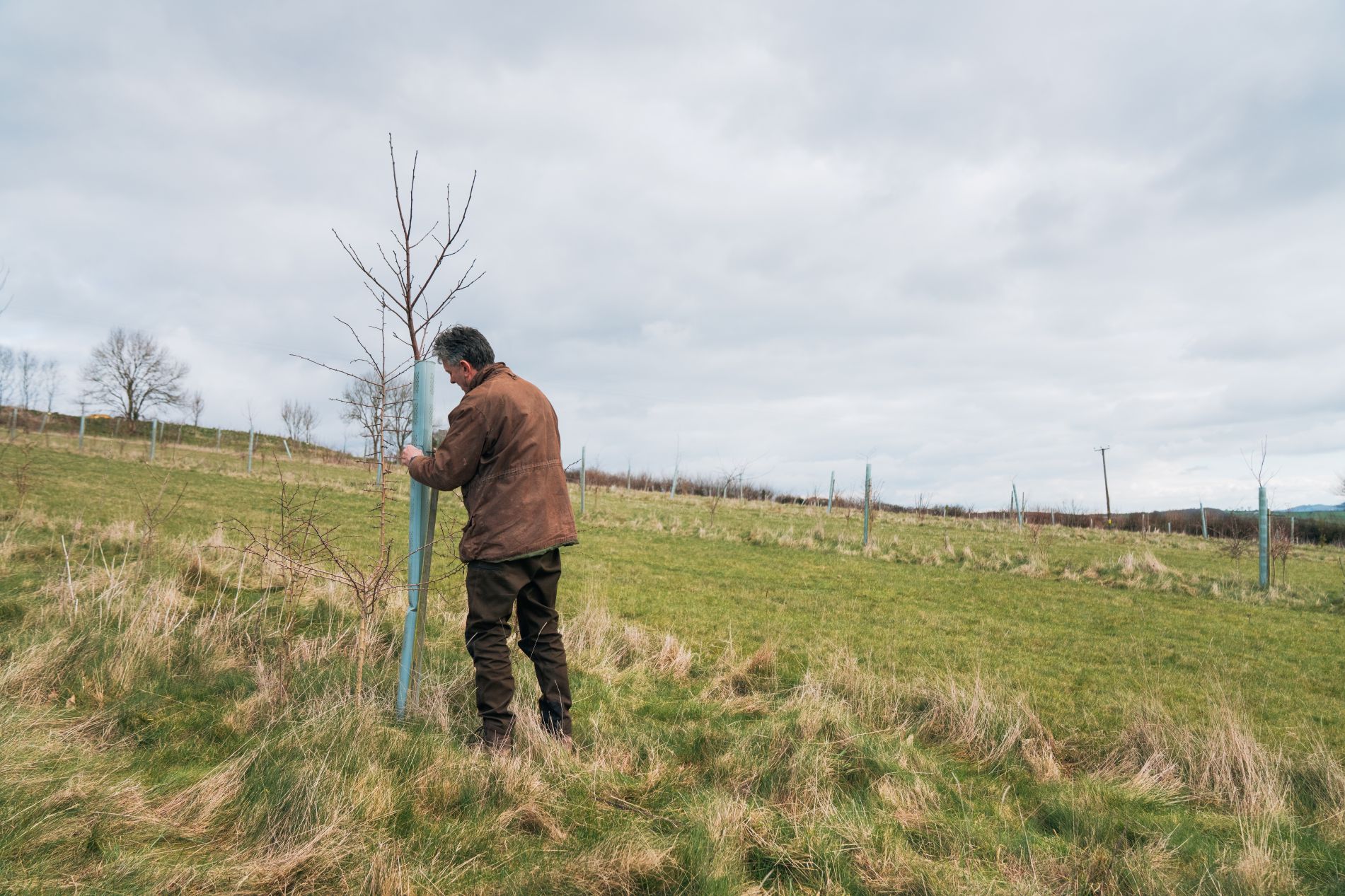
Financing green means accelerating finance to support the UK’s carbon targets, clean growth, resilience and environmental ambitions, as well as international objectives. This includes investment into nature and nature-based solutions such as solar farms or woodland creation projects to help address climate change.
There are many types of financing green, and they’re not exclusive to nature. Carbon-related finance can include renewable energy, emissions reduction, nature-based solutions like woodland creation, and carbon capture and storage. Nature-related finance is another type, and includes biodiversity, water quality and flood regulation.
Greening finance
Greening finance means integrating current and future financial risks and opportunities from climate and environmental factors into mainstream financial decision making. It also means making sure markets for green financial products are robust in nature.
This area of green finance is not necessarily about direct investment in green finance products. Instead, it’s about redefining current financial markets and corporate behaviour. It looks at improving practices in the financial sector, such as investment policy decisions, accounting and reporting, along with insurance and risk models, so that environmental risk and impact are properly factored into financial sector decisions.
Greening finance initiatives and standards
Many initiatives and standards fall within the category of greening finance. These typically aim to increase the number of companies reporting on their environmental risks, dependencies and climate impact.
Two of the market-leading initiatives in corporate sustainability reporting are the:
- Taskforce for Climate-related Financial Disclosures, which requires over 1,300 of the largest UK companies to carry out carbon accounting and report their findings. Many other companies have also committed to this reporting, even though it isn’t required by law
- Taskforce for Nature-related Financial Disclosures, which sets out a framework for companies to report on their impact and dependency on nature. This has been gaining support from both public and private sectors, though there’s no legal requirement for companies to report on it currently
The aim of increased environmental reporting like this is to help investors understand the environmental risks of their decisions. It’s also intended to change investment behaviour by improving understanding of the environmental risk and impact, while reducing the risk of greenwashing, where organisations make false or misleading claims to appear more eco-friendly than they are.
How green finance helps landowners
Green finance presents many new opportunities to landowners. As green finance grows, you can potentially bring in funding to support actions which benefit nature – making land use changes like woodland creation more financially attractive.
For example, woodland creation already provides traditional income streams such as grant funding and income from timber. Paired with green finance, it can also help compensate for potential forgone agricultural income from land use change to woodland.
You can see real examples of this in our financial case study for the England Woodland Creation Offer in commercial woodland over 100 hectares and our financial case study for the England Woodland Creation Offer on a 10 hectare site. These show how the numbers can work in practice.
In my next blog, I will break down these two key areas of green finance further. I will explain the mechanisms behind green finance, and how these new emerging markets and initiatives are developing to benefit landowners like you.
Learn more about green finance on Defra's blog.

Leave a comment