 Twiggy, Chair and Kath Morgan, Apprentice Co-ordinator at the Bill Hogarth Memorial Apprenticeship Trust introduce the Trust’s coppicing apprenticeship scheme. They invite apprentices to share their knowledge and experiences about the ancient art of coppicing.
The Bill Hogarth Memorial Apprenticeship Trust was established in 2001. It honours the legacy of Bill Hogarth, a coppice merchant who worked the woods of Cumbria for 56 years. Bill was known for his generosity as a teacher and in 1995 received an MBE for his contributions to the coppice industry. Following his death in 1999, friends and colleagues set up a charity to further his work, and to train the future generation of coppice workers.
The Bill Hogarth Memorial Apprenticeship scheme
As a former apprentice graduate and now sponsor, mentor, coppicer and Chair at the Trust, I have the pleasure to witness how each new cohort of apprentices develop the necessary skills and knowledge needed to continue Bill Hogarth’s legacy.
In this 3-year apprenticeship scheme, our apprentices learn about coppicing alongside a sponsor in their coppice business. They receive a bursary and budgets to complete the course and learn how to set up their own coppice business. Upon completion, our successful apprentices are awarded ‘The Bill Hogarth Coppice Diploma’.
As the Apprentice Co-ordinator, I am at present supporting the Trust’s 6 coppicing apprentices. In this blog you will hear more about what they have learnt and their experiences throughout their time on the apprenticeship scheme.
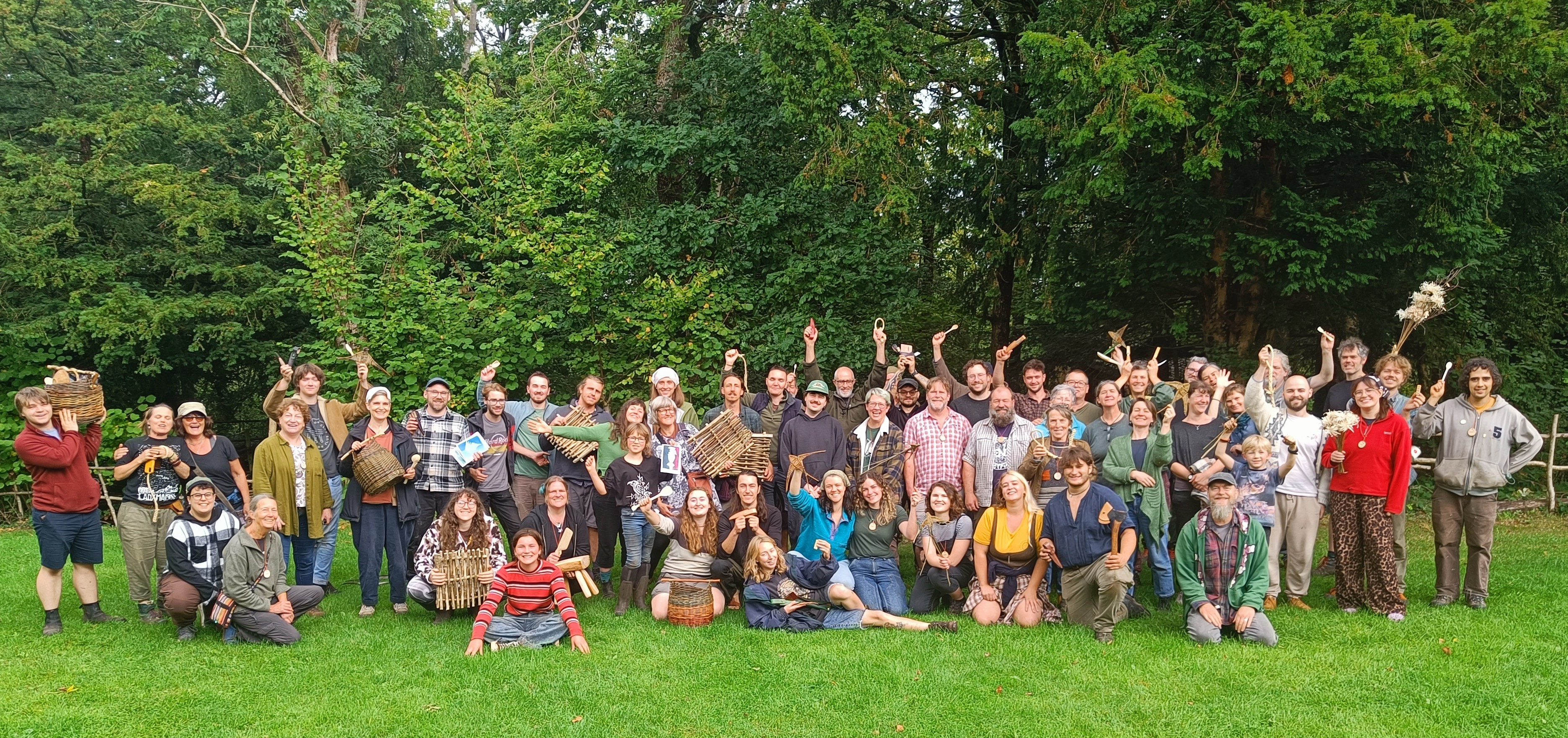
The ancient art of coppicing
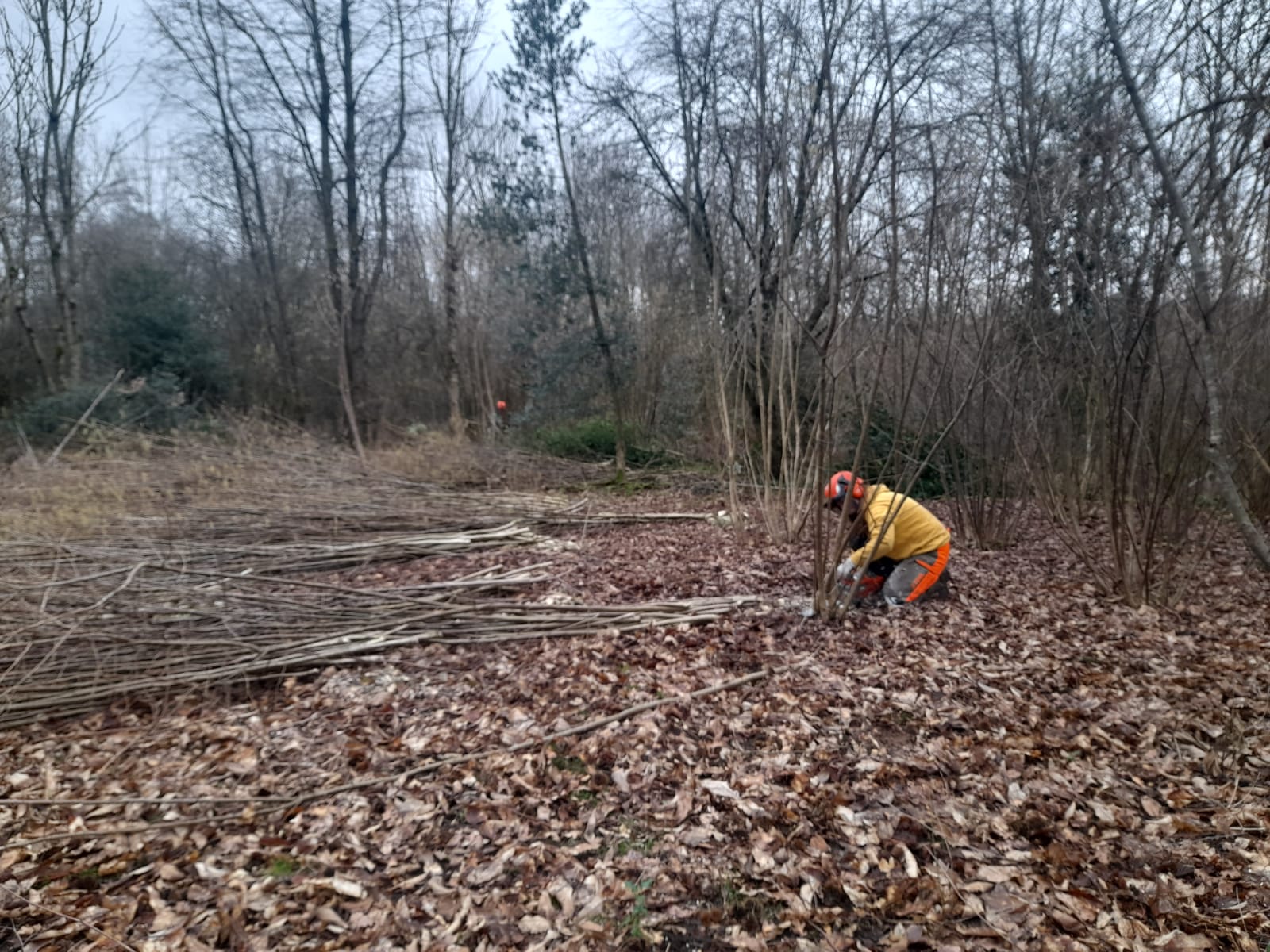
Coppicing is an ancient and sustainable woodland management technique for broadleaf trees or shrubs, dating back to the 13th century.
Hardwood trees are cut to ground level during the winter. As their root network remains intact, they’ll send up multiple shoots from the cut stump (the 'stool') and regrow the following spring. These are usually left for a few years (depending on the species), and then the process repeats as a way of sustainably harvesting the wood for many different products. These products are traditionally used for various woodcrafts. It’s believed woods have been coppiced since the Neolithic period, which has allowed habitat to develop alongside woodland work.
Tree protection
While regrowth is fresh it’s easily damaged which can lead to poor quality products. Damaged shoots grow back branching and bent, whereas straight stems are ideal for most coppice products. Severe damage can lead to the death of the root system or the whole tree. To prevent this, it’s common to put deer fencing around newly cut areas of coppice until the growth is too high for deer to reach. Another strategy is to control the deer population in the area.
Geographical differences
There are really interesting differences in coppicing across the country. For example, on a limestone pavement in Silverdale (north-west Lancashire), there aren’t many nutrients, so you can cut there on a 10-year rotation. Whereas, in Greater Manchester, you can cut hazel on a 7-year rotation.
There’s also quite a difference between the standards of species. Down south, for example, there’s lots of cherry and sweet chestnut which you don’t see as much of up north. And on limestone pavement there’s a lot more yew and blackthorn, which shows the diversity of what a coppice coup can look like.
The benefits of coppicing
Boosting biodiversity
Coppicing boosts biodiversity in a variety of ways and supports woodland flora and fauna. Cutting coppice creates cycles of light and shade on the woodland floor, which can be really beneficial for a variety of plants and animals. A greater amount of light getting to the woodland floor allows ground flora species (for example primrose, the food for rare fritillary butterflies) to thrive, and vines such as honeysuckle, are essential for dormice.
Coppicing helps to create mosaic woodland as they typically combine open scrub and grasslands to create vital edge habitats. Freshly cut coppice can look a little scary since the stools are cut right to the ground, but the following years of growth create a beautiful mosaic woodland of different life stages of the hazel tree.
Supporting the local economy
Coppicing can provide many benefits to the local economy which in turn supports the forestry sector. Coppicing supports the local economy by:
- creating green jobs
- developing a market for locally grown timber and creating awareness that it is a resource
- attracting customers to purchase wood products from local woodlands, while helping them to see the benefits of coppicing as a management system
- providing a return to the local economy from taxpayer funded afforestation and coppice restoration schemes
- reducing importation of wood products we can produce ourselves, for example charcoal and thatching spars
- supporting other local and regional industries like tool makers and crafts people
Sustainability
Coppicing is sustainable because when you cut trees down to the ground it enables the remaining stump (stool) to rapidly grow multiple stems in a repeating cycle every 7 to 20 years (depending on the species). Coppicing produces renewable material on a short rotation with minimal impact on the environment.
Remarkable, coppiced wood products
We asked our apprentices what they have made from coppiced wood during their time on the apprenticeship scheme. Their responses highlight the sheer variety of products you can make from this ancient form of woodland management.
Fay, first-year apprentice with Greenwood Twiggs, Helen Clarke and Morgan Leather, says:
"I like making stools and besom brooms (made from a bundle of twigs securely bound to a central wooden pole), and I’m looking forward to making a bargepole for my narrowboat.”
Leon, first-year apprentice at Westonbirt Arboretum and Noxon Farm, says:
“I like selling sticks to hedge-layers, for example to support another sustainable, rural craft.”
Emily, first-year apprentice with The Coppice Co-op, says:
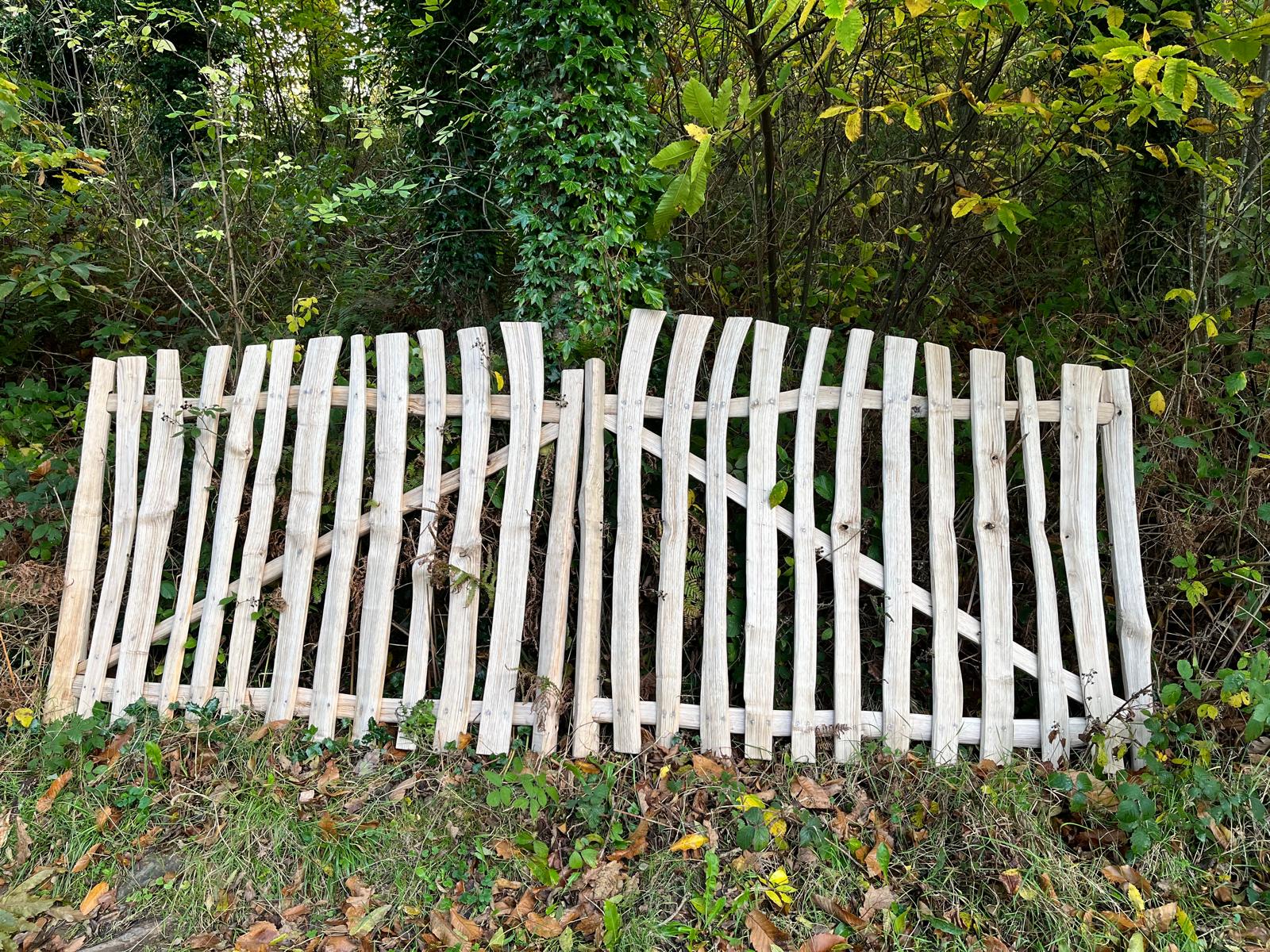
“I enjoy making gates and fencing from wood split, or ‘cleft’. I like the variety of processes involved; cleaving (the art of splitting harvested wood lengthwise along the natural grain), splitting down with the froe and cleave break (a traditional technique used to break down wood into smaller, straight-grained pieces), dressing the parts with an axe and shave horse (a foot-operated wood-clamping bench) and then marking out and creating the joints. The finished items are sustainable, long lasting and beautiful.”
Lucy, second-year apprentice with Leeds Coppice Workers, says:
“I enjoy making craft weavers and garden stakes the most as these tend to be the prettiest sticks and look nice in a bundle. One of the most unusual and creative products we’ve had to make are rat sticks – small ‘Y’ shaped sticks for rat enclosures.”
Leo, third-year apprentice with Sylvan Skills and Woodsmith, says:
“I make charcoal from overstood hazel stools using traditional ring kilns. I also create large sculptures out of coppiced willow – I’ve made a herd of deer and a huge Gruffalo. The strangest products I’ve ever made were fake trees for fancy hotel lobbies!”
Dylan, third-year apprentice with The Coppice Co-op and Greenwood Twiggs, says:
“I enjoy making Westmorland panels – a modern spin on the traditional hazel hurdle. I also like to pass on the skill and history of besom brooms – how they were used all over the country and came from coppice workers like Bill Hogarth. The weirdest thing I take out of woods is ‘chinchilla’ wood – as chinchillas apparently really like the texture of hazel and it makes good use of our offcuts and knobbly ends and bends that aren’t useful for other products."
The next generation of coppicers
By continuing this ancient management technique and investing in the next generation of skilled workers, we can continue to support biodiversity, produce renewable materials, strengthen local economies and create resilient, thriving woodlands for the future.
As Chair, I am proud that our apprenticeship scheme is supporting the next generation of skilled coppice workers to ensure coppiced woodlands remain a valuable part of our landscape for years to come.
Discover more about the Trust’s coppicing apprenticeship scheme. You may also be interested in joining the Woodland Pioneers – an introduction to coppicing course.
If you’d like to get involved as a sponsor, mentor or supporter for our apprenticeship scheme, email info@coppiceapprentice.org.uk.

Leave a comment