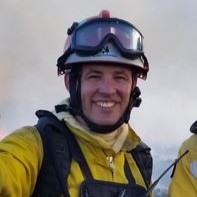
 Rob Gazzard, Wildfire and Contingency Planning Advisor at the Forestry Commission, shares the forward planning and training needed to manage wildfire incidents across England.
Having already experienced prolonged Amber wildfire alerts and two heatwaves so far this year, England has now entered a period of heightened wildfire risk this summer. The Met Office has highlighted that the combined risk factors of reduced rainfall, extreme temperatures, long dry periods and heatwaves increase this wildfire risk.
A heightened risk of wildfire
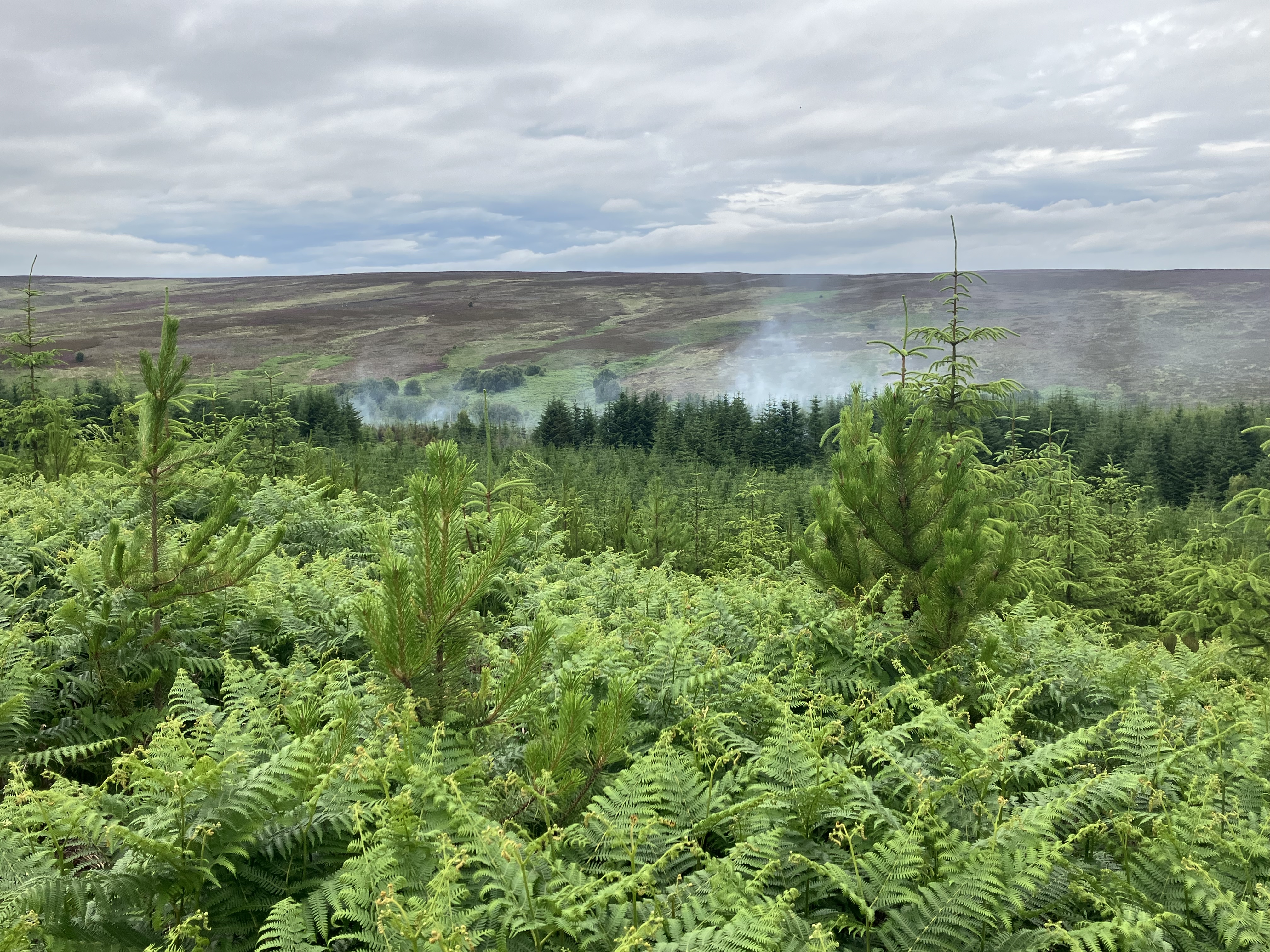
Climate change has intensified wildfire risk, creating increasingly challenging conditions for forest management. Rising temperatures and altered precipitation patterns are extending fire seasons and creating more frequent extreme weather events that are conducive to fire spread.
How we prepare for these increasingly challenging natural hazards and adapt to them is a critical consideration for our operations and business management teams.
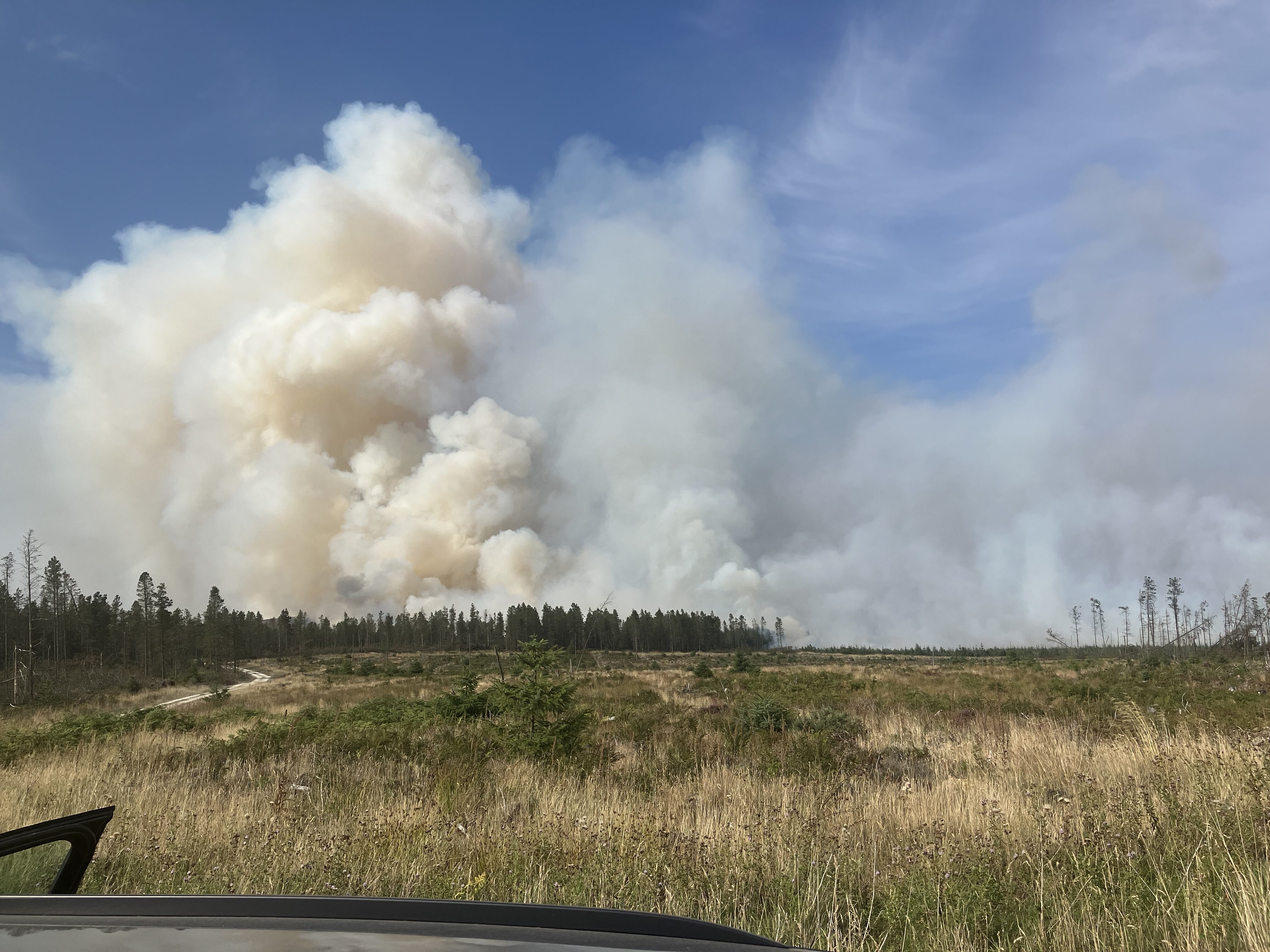
How we respond to wildfire alerts
Our National Duty Officer is alerted if wildfire is becoming a significant risk to our forests and woodlands. We have several Incident Specific Contingency Plans and one of the systems that informs our ‘situational awareness’ is the Natural Hazards Partnership’s (NHP) Daily Hazard Assessment.
It’s a system used across government to provide four statuses for natural hazards: green, yellow, amber and red. The Forestry Commission’s contingency planning for wildfire is triggered at amber. Once triggered, the National Duty Officer will request for an Incident Controller to set up a National Incident Management Team to manage the incident.
As with storms and other natural and man-made hazards, a National Incident Management Team will be placed on standby when alerted to a raised risk by the NHP, ready to address any impact on the Forestry Commission, the National Forest Estate managed by Forestry England or private woodlands.
Expert knowledge is provided from across the Forestry Commission, calling on a wide range of subject matter advisors covering topics such as civil engineering, storm damage, regulatory advice and plant health.
Training our National Incident Management Team
When the National Incident Management Team is placed on ‘standby’, a message is added to internal communication channels with the contact details of key roles. The team is led by an Incident Controller and Planning Officer, and comprises of an Operations Commander and a Communications Officer. These roles rotate on a weekly basis or in accordance to staff availability. Specialist wildfire forecasting is provided by a subject matter advisor.
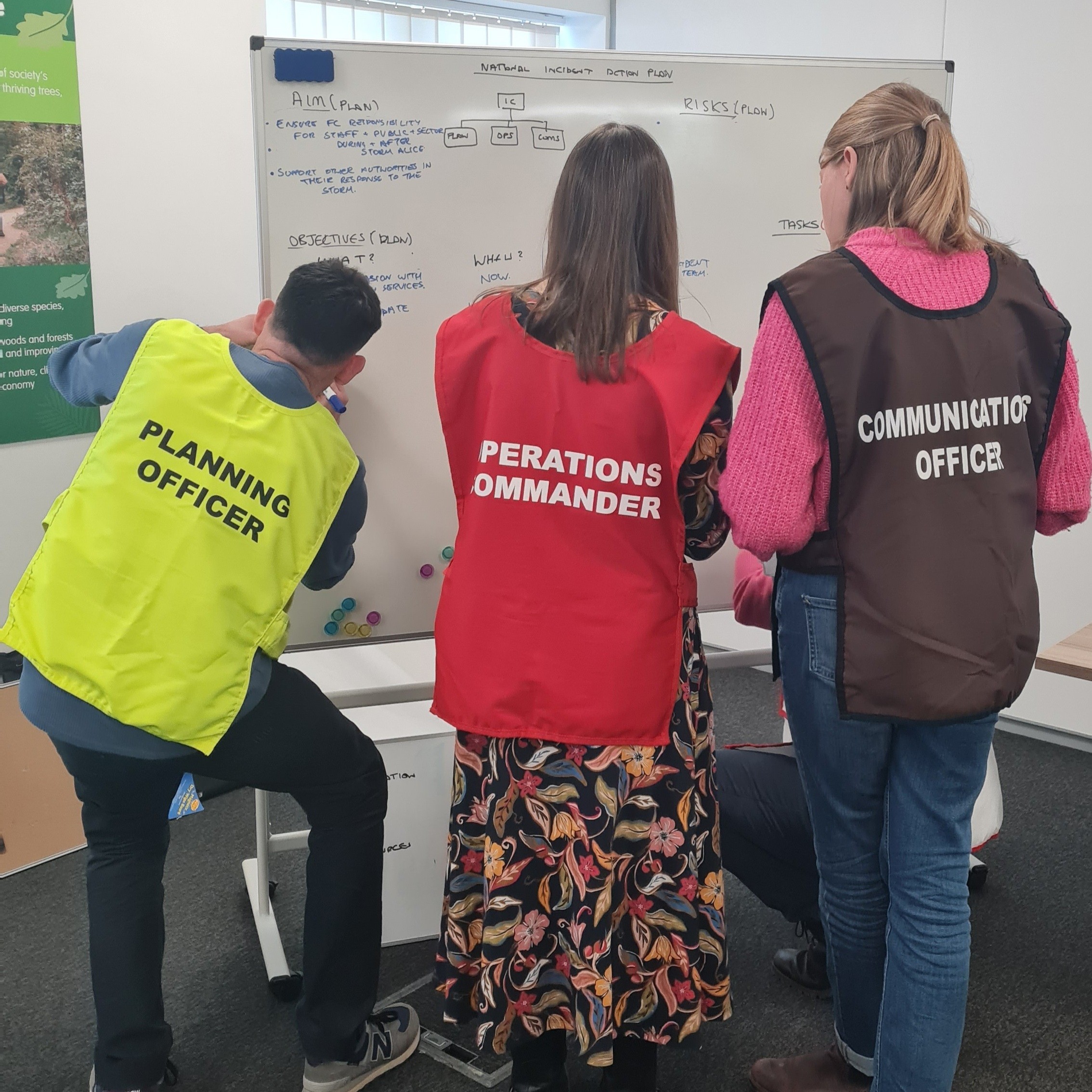
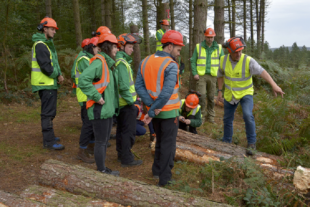
In spring 2025, our first 56 staff were trained in incident management to be part of a National Incident Management Team. Trained staff came from all parts of the Forestry Commission, including the Commissioners’ Office, Forestry England and Forest Research.
The Lantra accredited training is based on the Forestry Commission’s Incident Management System. Since then, over 120 staff have been trained across the Forestry Commission, Animal and Plant Health Agency, Defra, Scottish Forestry, and Science and Advice for Scottish Agriculture.
Incident Management training involves a two-day workshop providing learners with key information for working in an Incident Management Team, as well as numerous realistic scenarios to test them in various roles. Additional online learning, identified in the National and Local Emergency Plan, is provided for staff to build further role-specific knowledge, supported by a competency framework.
Help raise awareness of wildfire risk
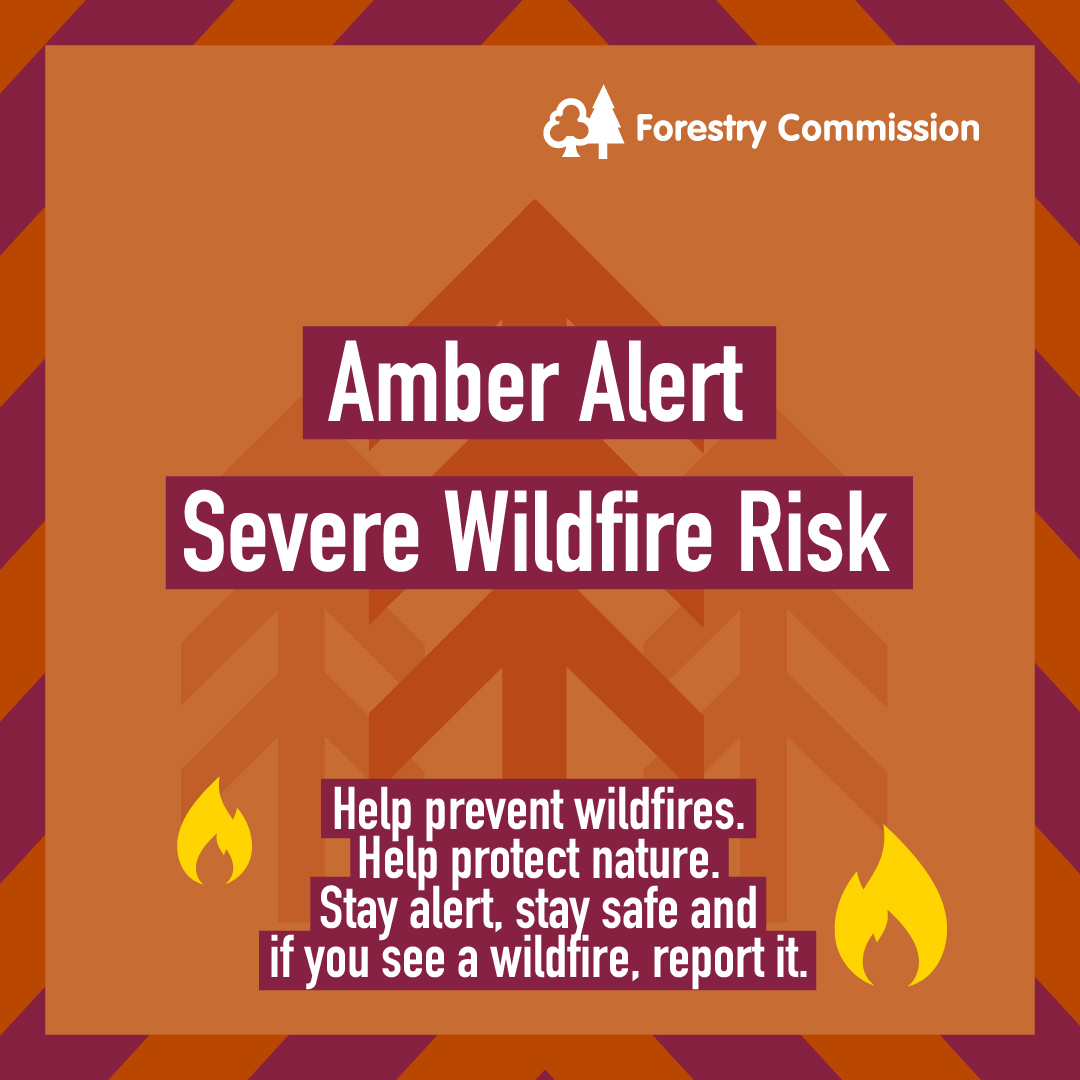
To help manage wildfire risk across our woodlands and forests, you can look out for our wildlife awareness posts on our LinkedIn and Facebook channels. Share our social media posts and use the hashtag #BeWildfireAware.
By sharing our posts, you will highlight the impact a wildfire can cause along with simple preventative measures such as fully extinguishing cigarettes, taking litter home and only using barbecues or having campfires in designated areas.
What to do if you spot signs of a wildfire
If you smell smoke or see it drifting through trees, or see flames and hear crackling, you must:
- Get to a safe place
- Call 999 immediately and provide any relevant information, for example the size and location of the wildfire
- If possible, meet the Fire and Rescue service at an agreed location.
You can find further information on how to respond to and prepare woodlands for extreme weather on GOV.UK.
2 comments
Comment by William Shaw posted on
I worked for Forestry England Yorkshire District as a Craftsperson from 2015 to 2021. One of the jobs we did was repair the fences bounding the numerous fire ponds that were dotted throughout the area. The repairs were done as these ponds were classed as hazards.
Most of these ponds were very overgrown and obviously no longer maintained as active fire ponds.
I know that a shortage of water to fight the Langdale wild fire last year was an issue.
With this in mind, and the increasing risk of wildfire, is there a plan to reinstate these ponds?
They must have served a useful purpose in the past for the FC to have created them in the first place. Is it time to get them back into working order?
Comment by Forestry Commission posted on
Hi William. As part of the learning from the Langdale fire, we will review the infrastructure that could have aided the response. With increasingly prolonged periods of summer drought, fire ponds are unlikely to be viable in this landscape anymore. To provide context, summer 2025 was the driest in over 100 years and by the time the fire was underway there had been 87 days with no rainfall in North Yorkshire. It is highly likely that any ponds would have been dry or of very limited benefit, considering the volume of water required by the Fire and Rescue Service.