Sarah Dixon, Forestry Commission Woodland Ambassador and landowner of Breach Park Farm in Oxfordshire, shares her woodland creation journey and her plans to open the woodland to enrich her local community.
There is a particular moment in the life of a young woodland when the work shifts. The years of planting, replacing, weeding and waiting begin to give way to something quieter and more rewarding – the sense that the land is finding its own rhythm.
At Breach Park Farm in South Oxfordshire, after 8 years of hard work, we are now living through that moment. With it has come a new question and a new challenge, how do we open this woodland up for the benefit of our wider community?
The answer is not straightforward. We need a business plan, infrastructure and careful thought about what community access genuinely means in practice. But our intention is clear.
Woodland access enriches communities
Our maturing woodland, sitting within the North Wessex Downs National Landscape, has the potential to do something beyond flood alleviation and conservation. I grew up with a close connection to nature, playing outside in the fields. Years of a busy corporate life followed, in and out of airports, in meeting rooms or in front of a laptop, rarely outside. Returning to the land has been fulfilling and restorative for me.
A woodland can bring people into nature, and it can offer children and adults alike the chance to be present in nature, to slow down and to connect with something beyond a screen. That felt like an opportunity worth pursuing for our woodland and for the people who might come to visit it.
How our woodland began
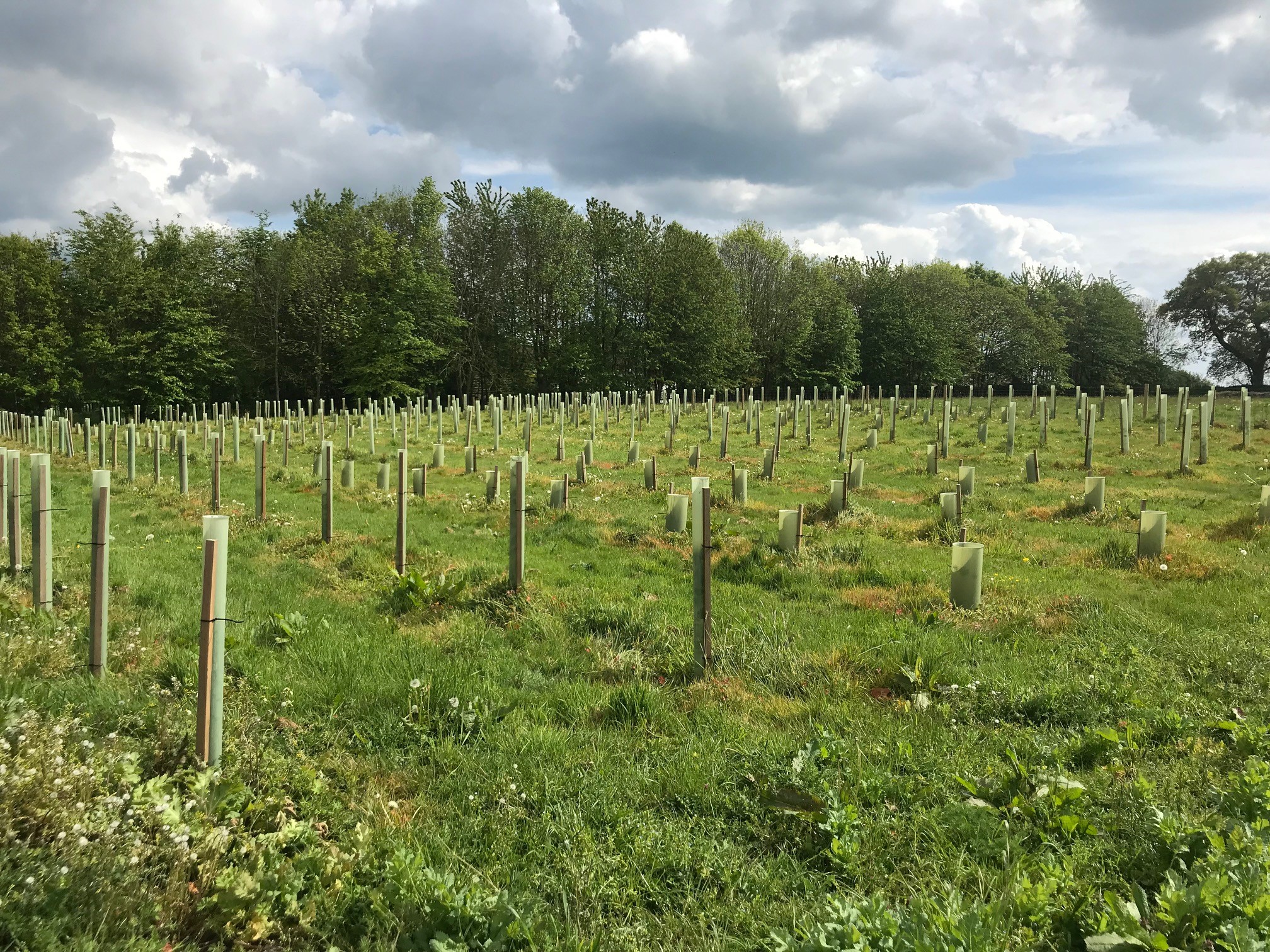
In late 2017 and into January 2018, we planted 5.73 hectares of new mixed broadleaf and conifer woodland at Breach Park Farm, with support from the Forestry Commission’s Countryside Stewardship Woodland Creation grant.
Our woodland scheme was designed and delivered by Nicholsons, who are local forestry and landscape specialists based in Oxfordshire, Northamptonshire and Gloucestershire.
Before a single tree went in the ground, we had the soil analysed and found it critically low in the essential nutrients that trees need to thrive, due to years of intensive farming. Therefore, the land’s subsoil was cultivated, nutrients were restored, grass was seeded and fencing was erected to protect against deer.
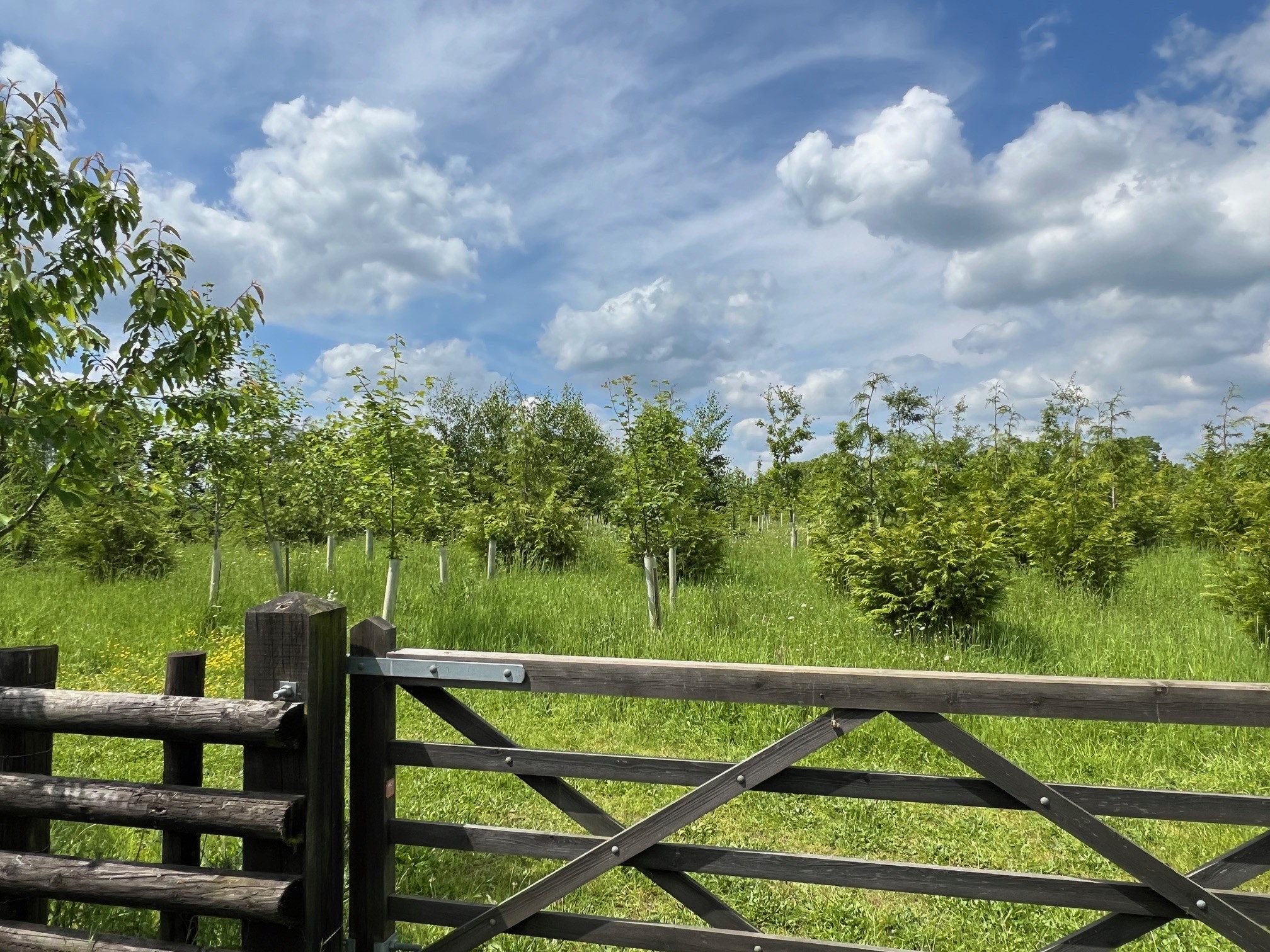
Only then did we plant 6,462 bareroot tree whips, species by species – oak, holm oak, lime, cherry, alder, wild service, alongside pines and western red cedar, plus 735 shrubs and 1,797 hedging plants.
A challenging summer
The following summer tested everything. The 2018 drought was one of the most prolonged on record for this part of England. Young bareroot whips newly planted into restored soil have almost no reserves when the ground bakes and the rain fails to arrive. We lost 12% of our trees that first season and replaced every single one the following winter.
From that point on, the maintenance programme ran year on year – weeding, spraying and pruning to keep the young trees from being overwhelmed by competition from surrounding grass and scrub.
What woodland establishment has given us
Nearly 10 years on, the canopy is forming. The trees that arrived as whips that you could hold in one hand are now a woodland.
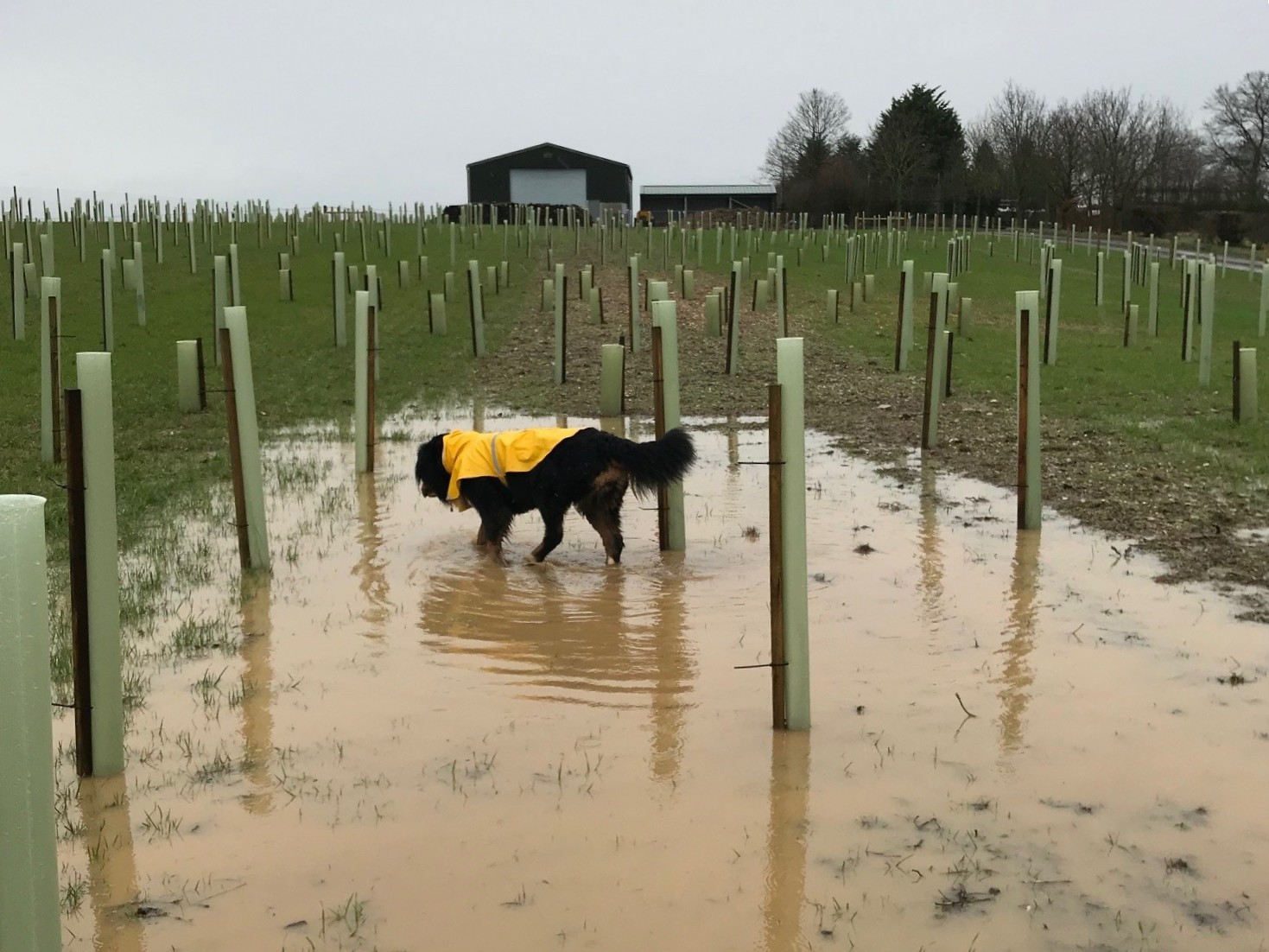
The flood alleviation benefit, one of the original objectives of the planting scheme, has been noticeable. Breach Park Farm sits in a location where nearby residential properties had suffered repeated rainwater run-off problems and since the woodland established, that problem has eased significantly.
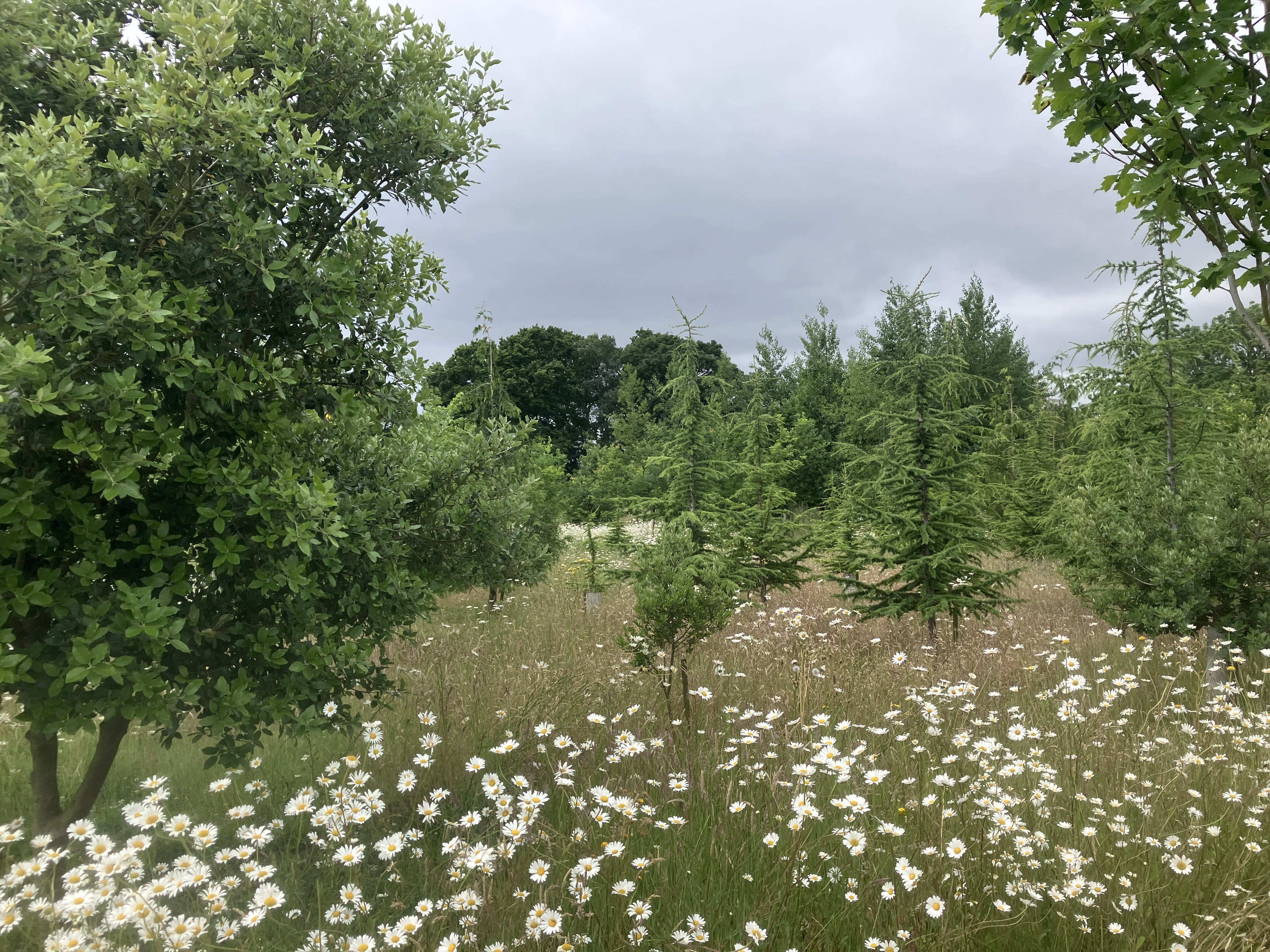
Biodiversity has also responded in ways that continue to surprise us. The woodland has become a valuable habitat corridor within the wider landscape and over the years we have seen a marked increase in the birds, insects and mammals that call it home.
But as the woodland has matured, so has our thinking about what else it can offer.
Unlocking our woodland for people
Only around half of private woodlands in England are actively managed,1 even though active, sustainable management increases every benefit a woodland provides. This includes biodiversity, flood management, water quality, soil health and human wellbeing.
The transition from stewardship to purposeful community use is one that many landowners who planted a decade ago are now beginning to consider. At Breach Park Farm, we are at the start of that journey. Our vision is for the woodland to become a place where people can come and simply be: forest school sessions for local children, wellbeing days for adults, quiet opportunities to reconnect with the natural world.
Natural England and others have documented the positive impact of outdoor learning environments on children's physical health, mental wellbeing and engagement with the world around them.2 For adults, the case is just as strong. Connection to nature, presence on the land, the chance to slow down somewhere that asks nothing of you but your attention – these things matter in ways we’re only beginning to properly understand.
Turning our vision into reality takes work. A business plan is in development and the infrastructure to support community access, from pathways to facilities, still needs to be funded, designed and built.
The Forestry Commission has produced guidance for landowners on opening woodlands for educational and community use. That guidance, along with the advice from the regional Forestry Commission team, has been an invaluable starting point.
A word to anyone thinking of planting
If you are a land manager considering woodland creation, do it. The first year is hard work, and hot, dry summers may test your nerve. But the compounding return in biodiversity, landscape and beauty is extraordinary. You can find an expert to design the scheme properly from the outset, prepare the ground as seriously as you prepare the planting list and be ready to partial replant.
What you will not be able to fully predict is where the woodland takes you. We planted ours for conservation and flood alleviation. A decade on, we are planning for children to learn in it, for adults to find stillness in it and for the community around us to benefit from it. That evolution feels like the right next chapter for us, and we can't wait to unlock its potential and welcome people in.
Find the grants available for you to start your own woodland creation journey.
You can also learn more about the Forestry Commission Woodland Ambassador programme.